

Do Outdoor Furniture Covers Help in Winter?
Table of Contents
- Do You Really Need Outdoor Furniture Covers in Winter?
- Which Materials Require Winter Protection
- How to Clean Patio Furniture Before Winter
- Best Material for Outdoor Furniture Covers
- Storing Outdoor Cushions in Winter
- Signs of Winter Damage and Prevention
- Frequently Asked Questions
Last Updated: September 18, 2026
Do You Really Need Outdoor Furniture Covers in Winter?
Whether you need outdoor furniture covers winter depends on your climate, the materials used, and how much protection you're willing to invest. The short answer: if you live somewhere with harsh winters, covers are essential. If you're in a mild climate with minimal freeze-thaw cycles, they're optional but still recommended for longevity.
The real question isn't whether covers help, they do. It's whether the investment makes sense for your specific situation. A breathable, waterproof cover prevents moisture accumulation, which is the primary culprit behind rust, mold, and structural damage. According to DIY Patio Furniture Guide, breathable covers are essential for preventing moisture buildup and rust while protecting against snow and ice.
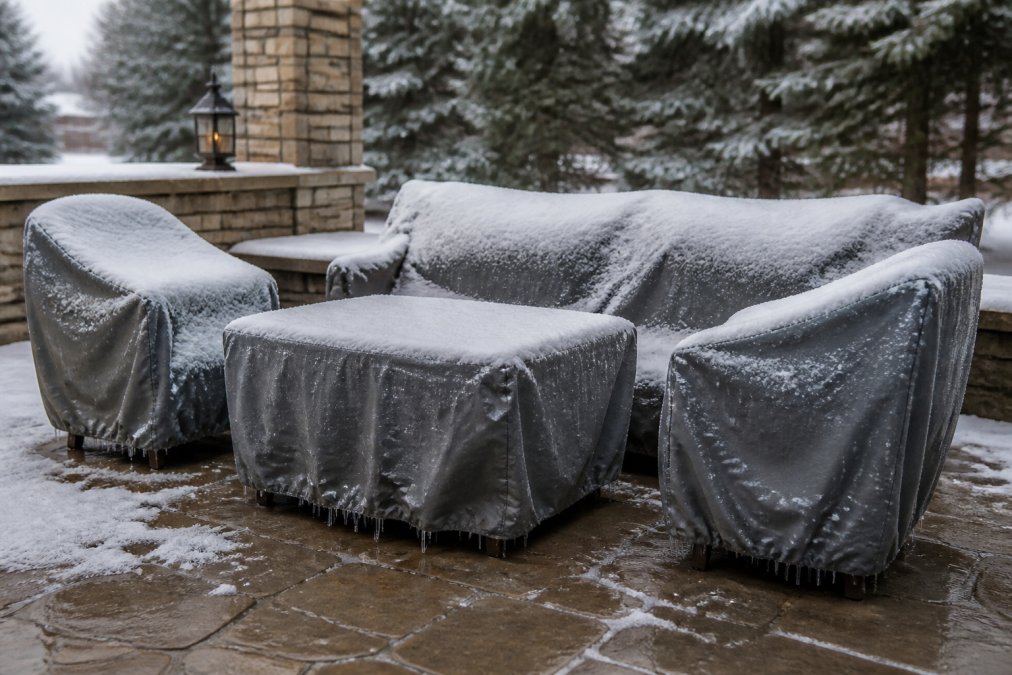
Here's what separates furniture that lasts five years from furniture that lasts fifteen: using quality outdoor furniture covers winter for consistent winterization. Most homeowners either skip covers entirely or use non-breathable plastic that traps condensation underneath. Both approaches accelerate deterioration. The middle ground, a quality breathable cover, extends furniture life significantly while keeping your outdoor living space investment intact.
Which Materials Require Winter Protection
Not all outdoor furniture materials need the same level of winterization, and protection requirements shift significantly based on your regional climate. Understanding both your furniture's material composition and your local winter conditions determines whether covers are truly necessary or optional.
Powder-coated aluminum and steel benefit greatly from covers, but the degree depends on your climate. In regions with frequent freeze-thaw cycles (temperature swings above and below 32°F multiple times per winter), moisture penetration accelerates corrosion. Coastal areas with salt spray exposure make covers essential for metal frames, as salt accelerates rust formation even under powder coating. In dry continental climates with stable sub-freezing temperatures, metal furniture faces less risk. Metal frames with synthetic rattan or woven elements are particularly vulnerable everywhere because moisture gets trapped in the weave, regardless of climate.
Teak wood is the outlier. Due to its natural oil content and tight grain structure, teak furniture is generally considered safe to leave outdoors throughout winter without a cover, even in harsh climates. TeakBook notes that teak's inherent durability makes it one of the few materials that can withstand seasonal exposure. However, in high-humidity regions (the Southeast, Pacific Northwest, and areas near the Great Lakes), covering teak still prevents mold spore colonization on the surface, even if the wood itself resists rot. Many homeowners in these regions choose to protect teak for aesthetic reasons and to prevent the black mold discoloration that develops in damp conditions.
Wicker and rattan absolutely need protection everywhere. These materials absorb water readily, which leads to mold growth and structural weakness. Even synthetic versions benefit from covers because moisture accumulation accelerates deterioration. The ventilation design in quality covers prevents the condensation that causes mildew spores to flourish. In humid climates, synthetic wicker still requires indoor cushion storage and breathable covers; non-breathable plastic will cause mold within weeks.
Cushions and soft goods should never stay outside under covers in any climate. Standard industry practice now dictates that cushions should be washed, dried completely, and stored indoors rather than left under covers during winter. Moisture trapped under a cover creates the perfect environment for mildew to develop. This is especially critical in humid regions where indoor storage space may be limited; consider a climate-controlled storage unit if basement or garage space isn't available.
Painted wood requires protection in freeze-thaw climates. Paint acts as a moisture barrier, but repeated freeze-thaw cycles crack the finish. Once cracks appear, water penetrates the wood itself. In stable cold climates where temperatures remain consistently below freezing, painted wood faces less risk from freeze-thaw damage, though UV protection from covers still extends paint life. In mild climates with occasional freezes, covers are optional but recommended for longevity.
Cast iron and wrought iron are highly susceptible to rust and should always be covered in winter, particularly in humid regions. These materials lack the corrosion resistance of aluminum or steel and will develop surface rust within weeks of exposure to moisture and freeze-thaw cycles.
The key principle: match your cover investment to your climate's moisture and temperature volatility, not just to material type alone.
How to Clean Patio Furniture Before Winter
Proper cleaning before storage or covering is non-negotiable. Dirt and debris trap moisture against the furniture surface, undermining what the cover is supposed to do.
Start by removing loose debris with a soft brush. Don't use high pressure, it forces water into crevices. For metal frames, wipe down with a damp cloth. For wood, use a soft-bristled brush with mild soap and water. Let everything dry completely in sunlight for at least 24 hours before covering.
For cushions, vacuum both sides, then wash with mild detergent and warm water. Rinse thoroughly and air-dry in direct sunlight until completely dry. This step prevents mildew growth during storage. Cushions stored damp will develop mold within weeks, so err on the side of over-drying.
For wicker or rattan pieces, use a soft brush to remove dust from crevices, then wipe with a damp cloth. These materials hold water in tight spaces, so extra drying time is essential.
Once everything is clean and dry, store cushions indoors in a cool, dry place. Keep them in breathable storage bags if possible, plastic traps moisture. For furniture left outside, apply the cover only after everything has dried completely. Covering damp furniture defeats the purpose.
10 x 20 Feet Waterproof Canopy Tent →
Best Material for Outdoor Furniture Covers
Not all covers are created equal, and the difference between a cheap tarp and a quality cover determines whether your furniture is actually protected or just hidden from view. More importantly, your cover choice can affect your furniture's warranty coverage.
Breathable fabric is non-negotiable. Look for covers made from polyester blends with a breathable membrane rated at least 100 gsm (grams per square meter). These allow moisture to escape while blocking water and UV rays. Non-breathable plastic traps condensation underneath, which causes rust and mildew to develop faster than if you'd used no cover at all. Many furniture manufacturers explicitly state in their warranty terms that using non-breathable covers voids corrosion warranties, a critical detail most homeowners miss. Check your furniture's warranty documentation before purchasing a cover; some manufacturers recommend specific cover types or materials.
Waterproof construction matters. The cover should shed water completely, not just slow it down. Sealed seams prevent water from seeping through stitching, which is a common failure point in cheaper covers. Look for covers with taped or welded seams rather than simple stitching. A quality waterproof cover typically costs 40-60% more than a basic tarp, but the difference in furniture longevity justifies the investment.
Snug fit prevents wind from lifting the cover and exposing furniture. Adjustable straps and elastic hems keep covers in place during winter storms. Loose covers billow in wind, allowing rain underneath. Covers with reinforced grommets (metal eyelets) and tie-down straps are more durable than those with simple elastic edges.
UV protection extends cover life. Covers fade and degrade in sunlight, so built-in UV stabilizers help them last multiple seasons. Quality covers handle 3-5 winters; cheap ones deteriorate after one. This matters because a degraded cover loses its waterproofing and breathability, defeating its purpose.
Weight and durability correlate with price. Heavier fabrics (around 200-300 gsm) outlast thin tarps. Budget covers feel papery; quality covers feel substantial and don't tear easily. A heavier cover also resists wind damage better and provides more reliable long-term protection.
Warranty and durability trade-offs: A premium breathable cover ($80-150 for a standard patio set) lasts 4-5 seasons and maintains its protective properties throughout. A budget cover ($20-40) may last one season before seams fail or breathability degrades. Over a decade, the premium cover is more economical and better protects your furniture investment. Additionally, using a manufacturer-recommended cover type may preserve your furniture's warranty coverage for rust, corrosion, or material defects, a benefit that can save hundreds of dollars if damage occurs.
Check your furniture's warranty before purchasing a cover. Some manufacturers specify that only breathable, sealed-seam covers are acceptable for warranty coverage. Others may void warranties if non-approved covers are used. This information is often buried in fine print, but it directly affects whether you're covered if winter damage occurs.
For furniture that stays outside, a breathable, waterproof cover rated for your climate is the minimum standard. For the best protection and warranty preservation, store cushions indoors and cover the frame itself with a manufacturer-approved cover. This dual approach maximizes furniture longevity and protects your warranty coverage.
Storing Outdoor Cushions in Winter
Cushions are the first thing to fail in winter storage because most homeowners leave them outside under covers. This is the single biggest mistake in off-season care.
Remove all cushions before the first freeze.
Signs of Winter Damage and Prevention
Recognizing damage early allows you to address it before it becomes structural. Some signs are obvious; others require closer inspection.
Frequently Asked Questions
Is it okay to leave outdoor furniture uncovered during winter?
It depends on your climate and furniture material. In regions with harsh winters, sustained freezes, heavy snow, and repeated freeze-thaw cycles, leaving furniture uncovered risks rust, corrosion, and structural damage. Teak furniture can safely remain uncovered due to its natural weather resistance, but metal, wicker, and cushioned pieces benefit from protection. High-quality, weather-resistant furniture left uncovered requires regular cleaning to prevent accelerated wear.
What is the best material for outdoor furniture covers?
Breathable, waterproof fabrics are ideal for outdoor furniture covers. These materials prevent moisture accumulation and mildew growth while blocking rain and snow. Look for covers with ventilation designs and snug-fitting straps to prevent wind damage. Avoid non-breathable plastic covers, which trap condensation and accelerate mold and mildew spores. Heavy-duty synthetic fabrics with UV protection extend furniture longevity by resisting both water damage and sun fading.
How should I store outdoor cushions for winter?
Clean and completely dry cushions before storage. Industry practice recommends storing cushions indoors rather than leaving them under covers outside. Place them in a dry storage shed, basement, or climate-controlled space to prevent moisture accumulation and mildew resistance issues. If indoor storage isn't available, use waterproof, breathable covers with ventilation. Never stack damp cushions, as this accelerates mold growth and reduces furniture longevity.
Can I leave metal patio furniture outside in winter?
Metal patio furniture, especially powder-coated aluminum and steel frames, benefits from winter covers to prevent rust and corrosion. Repeated freeze-thaw cycles and moisture exposure accelerate oxidation. A waterproof, breathable cover protects against element exposure while allowing ventilation. Regular cleaning before storage and applying protective coatings extends the structural integrity of metal furniture. Without covers, metal pieces typically show visible corrosion and weakening after one harsh winter.