

Maintain Wooden Garden Furniture in Humid Climates
Table of Contents
- Why Humidity Damages Wooden Garden Furniture
- Choose the Right Wood Species for Humid Climates
- Best Wood Sealer for Humid Climates
- How to Clean Mold Off Outdoor Wood Furniture
- How Often to Oil Outdoor Wood Furniture
- Control Ambient Humidity and Prevent Warping
- Seasonal Maintenance and Long-Term Care
Last Updated: August 25, 2026
Why Humidity Damages Wooden Garden Furniture
Humidity is one of the most destructive forces working against wooden garden furniture. When moisture levels stay consistently high, wood absorbs water into its grain, causing swelling, warping, and structural failure. The problem accelerates in humid climates where relative humidity regularly exceeds 60%, creating ideal conditions for fungal growth and rot.
Ignoring humidity damage early means expensive repairs or replacement within 3 to 5 years. A $2,000 furniture set can become worthless if moisture reaches the structural wood grain. This isn't a minor cosmetic issue, it's a financial threat that compounds over time.
The damage happens in stages. First, wood fiber absorbs moisture and swells. Then, as humidity fluctuates, the wood expands and contracts repeatedly. This constant movement breaks down the wood's cellular structure, weakens joints, and opens cracks where water can penetrate deeper. Fungi and mold follow, feeding on the organic material and accelerating decay. In humid climates, this cycle becomes relentless.
The ideal humidity level for wood furniture is between 40% and 60%. Most humid regions far exceed this range, which is why maintaining wooden garden furniture in humid climates requires deliberate, consistent action. Without intervention, you're essentially watching your investment deteriorate in real time.
Choose the Right Wood Species for Humid Climates
Not all wood performs equally in high-humidity environments. Some species resist moisture damage naturally, while others absorb water like a sponge and deteriorate within months. Selecting the right wood species is your first line of defense against humidity damage.
Teak stands as the gold standard for humid climates. Its natural oils repel water and resist decay for decades with minimal maintenance. Teak's density and oil content make it fundamentally different from softer woods, it simply doesn't absorb moisture the way pine or cedar does. The downside: teak costs significantly more than alternatives. But if you're investing in wooden garden furniture that will last 20+ years, teak pays for itself through reduced maintenance and replacement costs.
Ipe and cumaru are two other rot-resistant hardwoods worth considering. Both are extremely dense, naturally resistant to fungal growth, and perform exceptionally well in wet climates. They're harder to work with than teak and require more aggressive finishing, but they offer similar longevity at a slightly lower price point.
Acacia wood represents a middle ground. It's more affordable than teak, moderately resistant to moisture, and widely available. Downtown5 carries several acacia wood options, including the Folding Picnic Table with Metal Frame and Patio Chairs with Cushions, both featuring protective oil finishes to combat humidity. Acacia performs reasonably well in humid climates when properly sealed and maintained, though it requires more frequent resealing than teak.


Avoid softwoods like pine, fir, and cedar for permanent outdoor installations in humid regions. These woods absorb moisture rapidly, swell unpredictably, and succumb to rot within 3 to 5 years despite treatment. They're fine for temporary structures or covered areas with excellent ventilation, but in true humid climates, they're a poor investment.
Best Wood Sealer for Humid Climates
A quality protective sealant is the difference between furniture that lasts and furniture that fails. The best wood sealer for humid climates must accomplish three things: repel water, prevent fungal growth, and maintain the wood's natural appearance.
Polyurethane-based sealers are the most reliable choice for humid environments. They create a durable water-repellent barrier that prevents moisture from penetrating the wood grain. A two-part polyurethane applied in thin, even coats provides superior protection compared to single-part alternatives. The trade-off is application difficulty, polyurethane requires careful technique and proper curing conditions. But the protection lasts 2 to 3 years before reapplication is needed, making it worth the effort.
Teak oil is widely recommended but often misunderstood. While teak oil penetrates the wood and enhances its natural appearance, it's not a primary finish for high-humidity environments on its own. Teak oil requires annual reapplication and doesn't provide a true water barrier. If you use teak oil, pair it with a topcoat polyurethane for genuine protection. Many woodworkers apply teak oil first to nourish the wood, then seal over it with polyurethane.
For eco-conscious homeowners, water-based polyurethane offers a lower-toxicity alternative. It's easier to apply than oil-based versions, dries faster, and produces fewer fumes. The protection is comparable to traditional polyurethane, though some users report slightly less durability in extreme conditions. If environmental impact matters to you, water-based options are worth testing on a less visible piece first.
Avoid linseed oil and Danish oil as primary finishes. These penetrating oils enhance wood appearance but provide minimal water resistance. In humid climates, they'll need reapplication every few months and won't prevent moisture penetration. They work as supplementary treatments between polyurethane applications, but never as a standalone solution.
How to Clean Mold Off Outdoor Wood Furniture
Mold and mildew appear quickly in humid environments, especially on furniture stored in shaded areas or under cover where air circulation is poor. The good news: surface mold is easy to remove. The challenge: preventing it from returning.
Start with a pressure washer set to 1,500 PSI or lower. Higher pressure damages the wood grain and opens it to deeper water penetration. Use a 40-degree nozzle and maintain 12 inches of distance. Work across the grain, not against it. This removes loose mold spores and surface growth without gouging the wood.
For stubborn mold, mix one part bleach with three parts water and apply with a stiff brush. Let it sit for 10 to 15 minutes, then scrub thoroughly. Rinse with clean water and allow the wood to dry completely before applying any finish. Bleach kills mold at the root, but it can lighten wood color, so test it on a hidden area first.
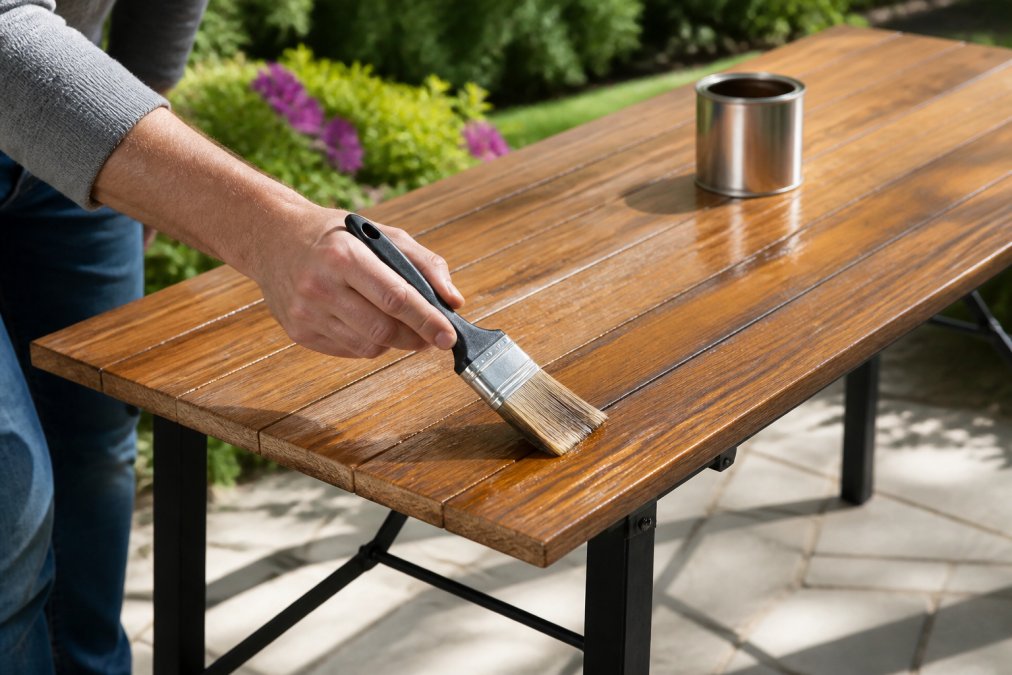
After cleaning, the critical step is preventing mold's return. Mold grows where moisture lingers. Improve air circulation around furniture by moving it away from walls, removing nearby vegetation, and ensuring water drains away from the pieces. If furniture must stay in a shaded area, consider installing a small fan nearby to keep air moving.
Apply a mildewcide additive to your next coat of sealant. Mildewcides inhibit fungal growth for months after application, reducing the frequency of mold outbreaks. Reapply annually in humid climates. This preventative approach is far more effective than repeatedly scrubbing mold off after it appears.
How Often to Oil Outdoor Wood Furniture
The frequency of oiling depends on your climate, wood species, and the current finish condition. In humid climates, the schedule is more aggressive than in dry regions because moisture constantly threatens the wood's protective layer.
For teak furniture, apply teak oil once or twice annually. Many owners oil in spring before heavy use season and again in fall. If you notice the wood starting to look dry or grayish, that's your signal to oil sooner. Teak can go longer between applications than softer woods because its natural oils provide inherent protection, but annual treatment keeps it looking rich and maintains water resistance.
For acacia and other moderate-hardness woods, reapply oil or sealer every 6 to 12 months in humid climates. This is more frequent than typical recommendations for drier regions, but humidity accelerates finish breakdown. If you're using a polyurethane sealer, plan for reapplication every 2 to 3 years. If you're using penetrating oils, expect annual maintenance.
The best approach is to inspect your furniture seasonally. Run your hand across the surface. If it feels dry or no longer repels water droplets, it's time to reapply finish. Don't wait for visible damage to appear, preventative oiling is always cheaper than restoration.
Control Ambient Humidity and Prevent Warping
Humidity control is your most powerful tool for protecting wooden furniture, yet it's the step most people overlook. You can't eliminate humidity in an outdoor environment, but you can manage it through strategic placement and ventilation.
Position furniture in areas with good air circulation. Avoid placing pieces directly against walls, under dense tree canopy, or in corners where air stagnates. Air movement dries surfaces and prevents moisture from accumulating in crevices. If you have a covered patio or pergola, ensure it has open sides rather than being fully enclosed. Enclosed spaces trap humid air and create conditions identical to a greenhouse.
Use a hygrometer to monitor ambient humidity levels around your furniture. These inexpensive devices ($15 to $40) measure relative humidity and help you understand your microclimate. If readings consistently exceed 70%, you need to improve ventilation or consider moving furniture to a drier location during the wettest seasons.
For stored furniture, a climate-controlled storage space is ideal but often impractical. If you must store pieces outdoors, use breathable covers, never plastic tarps. Plastic traps moisture underneath and accelerates mold growth. Breathable fabric covers allow air circulation while protecting from direct rain and UV exposure.
Rapid humidity swings are actually more damaging than consistently high humidity. Wood can adapt to a stable 75% humidity, but jumping from 50% to 85% repeatedly causes expansion and contraction that stresses joints and finishes. Consistent conditions, even if slightly elevated, are preferable to fluctuating ones.
Seasonal Maintenance and Long-Term Care
A structured seasonal approach prevents crisis repairs and extends furniture life significantly. Think of maintenance as a calendar-based routine rather than a reactive response to damage.
Spring: Inspect all pieces for winter damage. Clean surfaces with a soft brush and mild soap solution to remove dirt and algae buildup. Check for soft spots indicating rot, press your finger into the wood; it should feel firm. If you find spongy areas, that wood is compromised and needs professional restoration or replacement. After cleaning and inspection, apply your chosen finish (teak oil, polyurethane, or combination approach). Spring application gives maximum protection heading into the humid summer months.
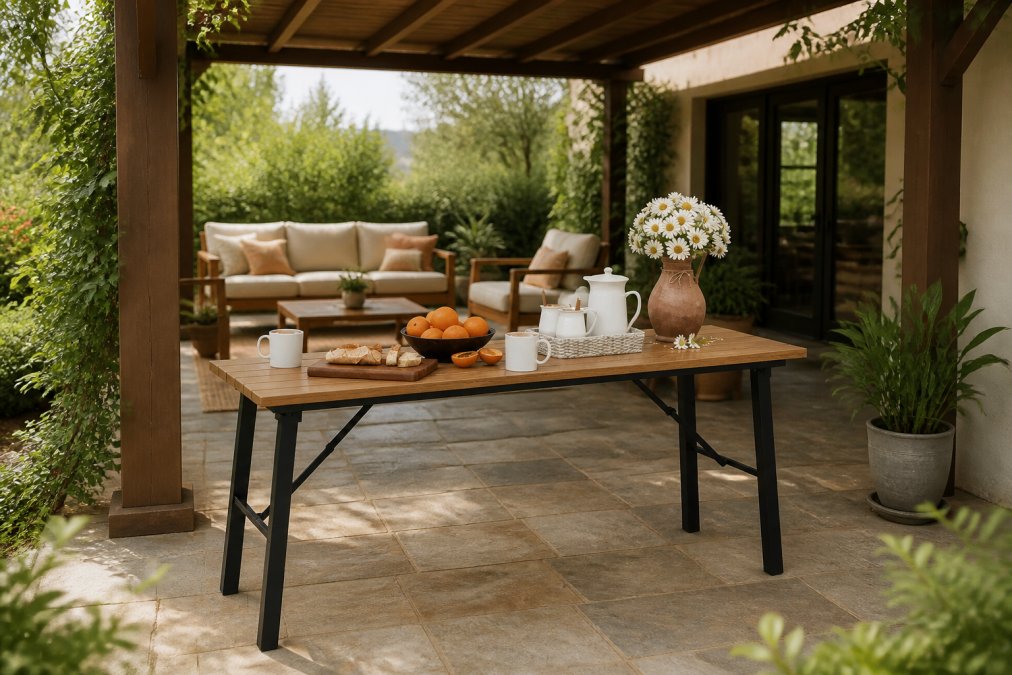
Summer: Monitor for mold growth, especially on furniture under cover or in shaded areas. Wipe down surfaces monthly with a dry cloth to remove moisture and debris. Check that water drains properly away from furniture, pooling water is a serious problem. If you notice mold starting, clean it immediately with the bleach solution mentioned earlier.
Fall: This is your second major maintenance window. Clean furniture thoroughly, inspect joints and hardware for corrosion, and apply a protective finish before winter weather arrives. Tighten any loose bolts or hardware; moisture causes metal to expand and contract, loosening fasteners over time.
Winter: In humid climates, winter is often the wettest season. Ensure furniture is positioned to shed water rather than collect it. If pieces are stored, check them monthly for mold or pest activity. Ventilation matters even during storage, a covered but open-sided structure beats a sealed shed.
| Maintenance Task | Frequency | Impact |
|---|---|---|
| Visual inspection | Monthly | Catches problems early |
| Surface cleaning | Every 3 months | Prevents mold accumulation |
| Finish reapplication | Annually to biannually | Maintains water barrier |
| Hardware check | Twice yearly | Prevents rust and loosening |
| Mildew treatment | As needed | Prevents fungal damage |
Downtown5's Patio Storage Bench and Outdoor Wooden Planter both come with protective oil finishes that reduce your first-year maintenance burden. These pieces are engineered for humid climates, but they still benefit from the seasonal care routine outlined above. The initial finish buys you time, but consistent maintenance is what determines whether furniture lasts 5 years or 20.

Keep detailed records of when you applied finishes and what products you used. This simple log prevents you from over-treating or under-treating your furniture. After a few seasons, you'll develop an intuitive sense of when maintenance is needed, but starting with a written schedule removes guesswork.
Maintaining wooden garden furniture in humid climates requires commitment, but it's far cheaper than replacing $2,000 sets every few years. The fundamentals, choosing rot-resistant wood, applying quality sealants, controlling moisture, and following a seasonal maintenance schedule, work together to protect your investment. Downtown5 offers acacia and hardwood pieces specifically engineered for outdoor use, with protective finishes that give you a head start. Pair those products with the care practices outlined here, and your furniture will look beautiful and perform reliably for decades.
=== FAQ ANSWERS (audit these too, same rules) ===
[1] Q: How do you stop wooden furniture from rotting in high humidity? A: Stop rot by maintaining moisture content below 60% relative humidity and applying a protective sealant annually. Use a water-repellent finish like polyurethane or a dedicated wood preservative to create a barrier against moisture penetration. Ensure proper ventilation around furniture and avoid covering pieces with plastic, which traps moisture. For wooden garden furniture in humid climates, inspect regularly for signs of wood rot and address damage immediately before it spreads through the wood grain.
[2] Q: What is the best finish for outdoor wood in humid climates? A: The best finish combines water-repellent protection with UV protection. Polyurethane-based sealants and teak oil are top choices for humid environments. Teak oil penetrates the wood grain and requires annual reapplication but enhances the wood's natural appearance. For maximum durability, use a dedicated outdoor wood sealer with mildewcide additives to prevent fungal growth. Avoid teak oil alone as a primary finish; pair it with a protective sealant for optimal results in high-humidity conditions.
[3] Q: How often should you seal wooden garden furniture? A: In humid climates, reseal wooden furniture annually or biannually depending on weather exposure. High-humidity regions with significant rainfall require more frequent resealing. Apply protective sealant every 12 months for furniture in covered areas and every 6-12 months for fully exposed pieces. Monitor the wood's appearance: if water no longer beads on the surface, it's time to reapply. Consistent seasonal maintenance prevents expensive repairs and extends furniture life by years.
[4] Q: Does humidity cause wooden furniture to warp? A: Yes, humidity causes wood expansion and contraction as moisture content fluctuates. Rapid humidity swings are more damaging than consistently high levels. Ideal relative humidity for wooden furniture ranges from 40-60%; levels common in humid climates accelerate warping and swelling. Maintaining stable ambient humidity with proper ventilation and avoiding plastic covers minimizes dimensional changes. Hardwoods like teak exhibit greater stability than softwoods, making them better choices for humid outdoor environments.
Frequently Asked Questions
Q: How do you stop wooden furniture from rotting in high humidity?
A: Stop rot by maintaining moisture content below 60% relative humidity and applying a protective sealant annually. Use a water-repellent finish like polyurethane or a dedicated wood preservative to create a barrier against moisture penetration. Ensure proper ventilation around furniture and avoid covering pieces with plastic, which traps moisture. For wooden garden furniture in humid climates, inspect regularly for signs of wood rot and address damage immediately before it spreads through the wood grain.
Q: What is the best finish for outdoor wood in humid climates?
A: The best finish combines water-repellent protection with UV protection. Polyurethane-based sealants and teak oil are top choices for humid environments. Teak oil penetrates the wood grain and requires annual reapplication but enhances the wood's natural appearance. For maximum durability, use a dedicated outdoor wood sealer with mildewcide additives to prevent fungal growth. Avoid teak oil alone as a primary finish; pair it with a protective sealant for optimal results in high-humidity conditions.
Q: How often should you seal wooden garden furniture?
A: In humid climates, reseal wooden furniture annually or biannually depending on weather exposure. High-humidity regions with significant rainfall require more frequent resealing. Apply protective sealant every 12 months for furniture in covered areas and every 6-12 months for fully exposed pieces. Monitor the wood's appearance: if water no longer beads on the surface, it's time to reapply. Consistent seasonal maintenance prevents expensive repairs and extends furniture life by years.
Q: Does humidity cause wooden furniture to warp?
A: Yes, humidity causes wood expansion and contraction as moisture content fluctuates. Rapid humidity swings are more damaging than consistently high levels. Ideal relative humidity for wooden furniture ranges from 40-60%; levels common in humid climates accelerate warping and swelling. Maintaining stable ambient humidity with proper ventilation and avoiding plastic covers minimizes dimensional changes. Hardwoods like teak exhibit greater stability than softwoods, making them better choices for humid outdoor environments.
This article was written using GrandRanker