

Tips for Styling a Small Apartment in 2026
Table of Contents
- Start With Scale and Proportion, Not Storage
- How to Make a Small Room Look Bigger With Color and Light
- Multi-Functional Furniture for Small Spaces That Earns Its Footprint
- Apartment Storage Solutions That Don't Add Clutter
- Zoning, Mirrors, and Floor Plan Tricks for Small Apartments
- Cable Management and Renter-Friendly DIY Fixes
- Seasonal Transitions and the Mental Side of Small-Space Living
- Frequently Asked Questions
Last Updated: September 16, 2026
Start With Scale and Proportion, Not Storage
The number one mistake in small apartment decorating is adding more storage, furniture, and objects until every surface is occupied, according to Warmcazza's 2026 small apartment decorating guide. That instinct makes a compact space feel smaller, not bigger. The fix starts with scale and proportion before you buy a single shelf.
How to Make a Small Room Look Bigger With Color and Light
To make a small room look bigger, keep the largest surfaces in light, warm tones and add depth through smaller accents. That is the core principle. Walls, sofas, and curtains should stay in warm white, oatmeal, or soft beige, while pillows, art frames, and rug borders carry the contrast, per Povison's small living room makeover guide.
Pick a Light Base Palette for Large Surfaces
A cohesive color palette does not mean everything matches. It means the biggest visual weight stays light and consistent. Choose one base tone for walls and large upholstery, then let smaller pieces introduce texture and personality.
Three mechanics make this work in practice:
- Finish matters as much as hue. A flat or matte finish on walls diffuses light and hides drywall imperfections, while a satin or eggshell finish in the same color bounces more light and reads slightly brighter. For ceilings, a flat white in the same base tone keeps the eye moving upward instead of stopping at the wall line.
- Carry the base tone onto the trim and ceiling. Painting baseboards, door casings, and the ceiling the same color as the walls removes the horizontal bands that visually chop a small room into segments. This is the single highest-impact change renters can make with a landlord's permission.
- Reserve contrast for the 20%. Pillows, art, rug borders, and one accent chair carry the darker or bolder tones. If more than about a fifth of the visible surface is high-contrast, the room starts to feel busy rather than open.
Layer Ambient and Task Lighting Instead of One Overhead Fixture
One overhead light flattens a room and creates harsh shadows. Layer instead:
- Ambient light from a floor lamp or wall sconce, aim for a warm white bulb around 2700K to 3000K, which reads as cozy rather than clinical. Cool white bulbs in the 4000K+ range make a small room feel like an office.
- Task light for reading or desk work, a focused lamp at 3000K to 3500K keeps text legible without glare.
- Accent light behind a plant or art piece for depth, a small uplight or picture light adds a third layer of shadow and highlight that makes the wall plane recede.
Multi-Functional Furniture for Small Spaces That Earns Its Footprint
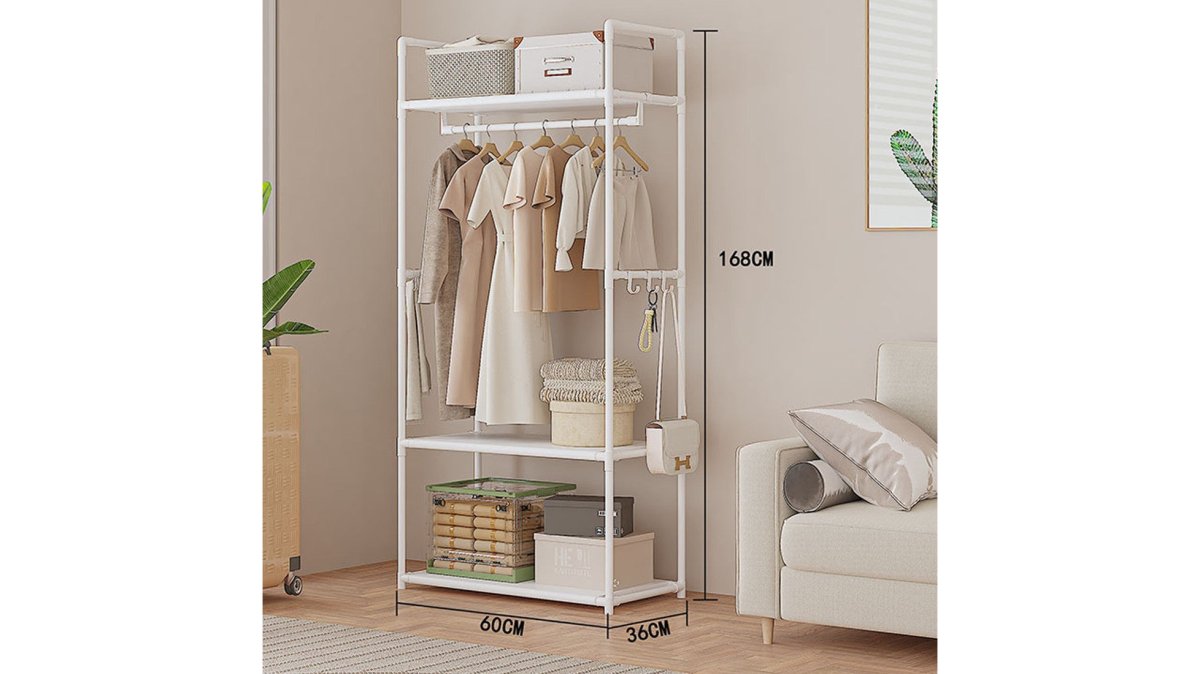
Multi-functional furniture for small spaces is any piece that serves two or more purposes without adding visual bulk. A storage ottoman, a folding dining table, or a clothes rail with a built-in shoe shelf all qualify. The test is simple: does the piece replace at least two single-purpose items?
Apartment Storage Solutions That Don't Add Clutter
Apartment storage solutions work best when they go up, not out. Vertical storage keeps your floor clearance intact and draws the eye upward, which makes ceilings feel higher. Wall-mounted shelves, over-door racks, and tall narrow bookcases all follow this rule.

Go Vertical Before You Go Bigger
Before you buy another freestanding cabinet, look at your walls. A wall-mounted towel rack with a shelf, like the Towel Rack, Bathroom Towel Storage Rack, Bath Towel Holder, Iron and Wood Wall Art ($75.00), holds at least three bath towels and frees up floor space in a small bathroom. The metal and natural wood combination adds warmth without visual weight.

| Storage Type | Floor Space Used | Best For | Renter-Friendly |
|---|---|---|---|
| Wall-mounted shelves | None | Bathrooms, kitchens, entryways | Yes |
| Over-door racks | None | Closets, laundry areas | Yes |
| Freestanding tall units | Minimal | Bedrooms, living rooms | Yes |
| Built-in cabinetry | Some | Permanent upgrades | No |
Zoning, Mirrors, and Floor Plan Tricks for Small Apartments
Zoning and mirrors are the two most underused tools in small-space styling. A room divider, a rug, or a change in lighting can separate a studio apartment into distinct zones without walls. Mirrors create an optical illusion of depth by reflecting light and sight lines.
Zone With Rugs, Not Just Furniture
The cheapest way to define zones in a studio is a rug. A rug under the bed and a separate rug under the sofa create two visual territories even when the furniture sits in one open room. Keep at least 18 to 24 inches of bare floor between the two rugs so the eye registers a gap, not a continuous surface.
- Folding screens, lightweight, movable, and available in heights from about 5 to 6 feet. A screen that stops below eye level keeps sight lines open while still marking a boundary.
- Tall open shelving, a narrow bookcase placed perpendicular to a wall divides a sleeping area from a living area and adds storage on both sides. Choose one no deeper than 12 to 14 inches so it does not eat floor clearance.
- Curtains on a ceiling track, a floor-to-ceiling curtain hung from a tension rod or adhesive track can close off a sleeping nook at night and disappear during the day. This is the most flexible option for renters who cannot drill.
Mirror Placement and Sizing
Place a large mirror opposite a window to double the natural light. The mirror does not need to be huge to work, but it does need to be sized to the wall. A common rule of thumb is that a mirror should span at least half the width of the furniture or wall it faces, or it reads as a small object rather than an architectural feature.
Multifunctional Clothes Rail Garment →
Three placement patterns that consistently work:
- Opposite a window, reflects daylight back into the room and doubles the perceived depth.
- Behind a sofa or console, a wide, low mirror adds a horizontal band of reflected light without competing with art.
- On a narrow wall at the end of a hallway, reflects the corridor back on itself and makes a short entry feel longer.
Floor Plan Tricks That Cost Nothing
Before you buy anything, try these layout moves:
- Float the sofa off the wall. Pulling a sofa 6 to 10 inches away from the wall creates a walkway behind it and makes the room feel deeper.
- Angle one piece. A single chair turned 45 degrees toward the center breaks the grid and adds visual interest without adding furniture.
- Keep the longest sight line clear. Identify the longest diagonal view in the apartment and avoid placing tall furniture across it. A clear sight line is what makes a small space read as open.
The goal is spatial awareness: your brain should register separate functions even in one open room.
Cable Management and Renter-Friendly DIY Fixes
Cable clutter is the fastest way to undo a styled apartment. Charging cords, HDMI cables, and power strips sprawl across floors and counters, and no amount of throw pillows hides them. Budget-friendly cable management fixes this without drilling a single hole.
Other renter-friendly DIY fixes:
- Use command hooks for lightweight art instead of nails
- Run cables along baseboards with adhesive clips
- Mount a power strip under your desk with velcro strips
- Group devices on one charging station to reduce cord sprawl
Seasonal Transitions and the Mental Side of Small-Space Living
The psychological impact of small-space living is real, and most guides ignore it. A cramped, cluttered apartment raises stress and makes it harder to relax. The good news: the same styling choices that make a room look bigger also make it feel calmer.
Frequently Asked Questions
What is the 3-5-7 rule in decorating?
The 3-5-7 rule is a styling guideline for arranging accessories in odd-numbered groups: three small objects, five medium ones, and seven of a smaller scale, grouped by height and texture. In a small apartment it keeps surfaces from turning into clutter piles because each grouping has a defined size. Apply it to a shelf or coffee table, not to every flat surface at once. Odd numbers read as intentional; even numbers tend to look staged.
What are common home decor mistakes to avoid in a small apartment?
Over-furnishing is the biggest one. Warmcazza reported in February 2026 that the most common small-apartment mistake is adding storage, furniture, and objects until every surface is occupied, which makes the room feel smaller. Other frequent errors: oversized furniture that swallows the room, one harsh overhead light instead of layered ambient lighting, and dark heavy curtains that block natural light. Fix the scale and the clutter first, then restyle.
How do you make a small apartment look expensive on a budget?
Keep the largest surfaces in light, warm tones like warm white, oatmeal, or soft beige, and add depth through smaller accents such as pillows, art frames, and rug borders, per Povison's February 2026 guidance. Then spend on one or two well-made pieces instead of many cheap ones. A $75 iron and wood wall towel rack or a $107.20 clothes rail with a built-in shelf does more for a room than five flimsy accessories that wobble.
What are the best furniture layouts for small apartments?
Pull furniture slightly away from the walls and float the main seating piece on a rug to define a zone. Leave clear floor clearance on the main walking path, and use a room divider or a sofa back to separate sleeping and living areas in a studio apartment. Multifunctional pieces matter here: a freestanding clothes rail with a shelf can sit in a hallway or bedroom and hold outfits, shoes, and bags without a dedicated closet.