

How to Choose Safe Non-Toxic Furniture for Kids
Table of Contents
- Understanding Non-Toxic Furniture for Kids
- Solid Wood vs. Engineered Wood: Which Is Safer?
- How to Build a Kids Furniture Safety Checklist
- Identifying Low-VOC Furniture for Kids
- Choosing Formaldehyde-Free Furniture
- Safe Furniture Finishes for Kids
- Certifications and Standards That Matter
- Secondhand Furniture, Recalls, and Ventilation
- Frequently Asked Questions
Last Updated: October 9, 2026
Understanding Non-Toxic Furniture for Kids
When furnishing a child's room with safe non-toxic furniture kids need, safety matters more than style.
The Green Science Policy Institute has documented harmful flame retardants in most couches and baby products studied over the past decade. Choosing safe non-toxic furniture for kids means understanding what goes into the pieces you buy, and what stays out.
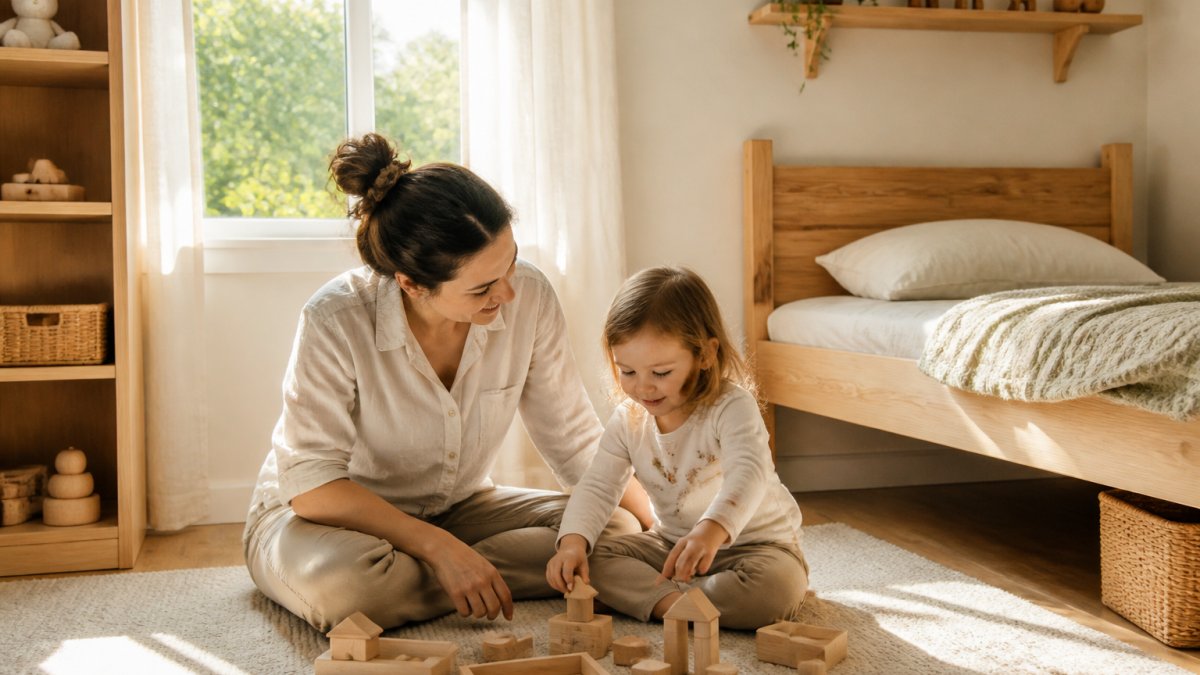
We help families find home goods that work for real life, including furniture that won't compromise your child's health. Safe non-toxic furniture for kids protects them from formaldehyde, volatile organic compounds (VOCs), flame retardants, and heavy metals like lead.
Here's what matters most:
- Off-gassing: chemicals escaping from foam, glues, and finishes into the air
- Contact exposure: skin contact with treated surfaces or upholstery
- Durability: pieces that last without breaking down and releasing particles
- Certifications: third-party testing that backs up "non-toxic" claims
Most parents assume furniture sold in stores is safe. It isn't automatically.
Solid Wood vs. Engineered Wood: Which Is Safer?
Solid wood is the safer choice for children's furniture: wood all the way through, with no glues binding scraps together and no formaldehyde-laden adhesives.
Engineered wood includes plywood, MDF (medium-density fiberboard), and particleboard. These products use adhesives to bind wood particles or veneers. Those adhesives often contain formaldehyde, a chemical linked to respiratory issues and off-gassing that can last months or years.
Here's the practical difference:
| Material | Off-Gassing Risk | Durability | Best For |
|---|---|---|---|
| Solid wood | Low | High | Beds, dressers, play tables |
| Plywood | Medium | Medium | Shelving, storage boxes |
| MDF | High | Low | Avoid for kids' rooms |
| Particleboard | High | Low | Avoid for kids' rooms |
Solid wood costs more upfront, but it doesn't break down as quickly and won't fill your child's room with chemical fumes for months after delivery. A solid wood crib or bed frame from a curated selection won't off-gas harmful chemicals into your child's sleeping space.
Look for durable, naturally low-formaldehyde species like oak, maple, birch, or walnut.
How to Build a Kids Furniture Safety Checklist
A kids furniture safety checklist protects you from guessing. Use this approach when shopping for any piece.
Step 1: Ask about the wood type
Ask the retailer or manufacturer: "Is this solid wood or engineered?" If they can't answer clearly, move on. Solid wood is your baseline.
Step 2: Request a material disclosure
Reputable brands provide a full material list.
Step 3: Check for certifications
Look for Greenguard Gold or Greenguard Certification, the most reliable third-party verification for low-VOC emissions.
Step 4: Smell the furniture
Strong chemical smells indicate off-gassing. A new piece should smell like wood, fabric, or nothing at all, not like a science lab.
Step 5: Verify flame retardant status
Ask whether the foam or fabric contains added flame retardants.
Step 6: Check country of manufacture
Furniture made in countries with stricter environmental standards is generally safer. Ask where the piece was made; transparency signals a trustworthy brand.
Use this checklist every time you shop. It takes five minutes and eliminates most unsafe options.
Identifying Low-VOC Furniture for Kids
Low-VOC furniture for kids emits fewer volatile organic compounds, the gases that create that "new furniture smell" and can irritate lungs, eyes, and skin.
VOCs come from foam, adhesives, paints, stains, and fabric treatments, escaping into the air as off-gassing. A child breathing this air 8-10 hours a night is exposed to more than an adult in a living room.
Low-VOC doesn't mean zero VOCs. It means emissions are below a safe threshold set by testing standards. Look for these markers:
- Greenguard Gold Certified: the strictest standard for children's products
- Greenguard Certified: good standard for general furniture
- Low-VOC finishes: water-based stains and paints instead of solvent-based
- Natural foam: latex or plant-based foam instead of polyurethane
- Solid wood with minimal finish: bare wood or oil finishes release fewer chemicals
When you bring a new piece into your child's room, open windows for at least 48 hours. Even low-VOC furniture benefits from ventilation, which speeds up off-gassing and clears the air faster.
We prioritize pieces that meet or exceed low-VOC standards, so your child's furniture won't fill the room with chemical fumes while they sleep or play.
Choosing Formaldehyde-Free Furniture
Formaldehyde is a preservative and adhesive used in engineered wood, foam, and some fabric treatments (Formaldehyde in Your Home: What you need to know | Formaldehyde and Your Health). It's invisible, odorless at low levels, and linked to respiratory problems with long-term exposure.
Formaldehyde-free furniture means:
- Solid wood with no formaldehyde-based glues
- Foam without formaldehyde binders
- Fabric without formaldehyde-based finishes
- Adhesives that use alternative binders (like soy-based or water-based glues)
Check the material disclosure. Reputable manufacturers label products "formaldehyde-free" or "ultra-low-formaldehyde." "Compliant with CARB standards" (California Air Resources Board) is a good sign, since CARB sets strict formaldehyde emission limits.
The challenge: engineered wood is cheaper, so many budget brands use it, meaning less upfront cost but more off-gassing. Solid wood costs more but protects your child's health and lasts longer.
For safe non-toxic furniture kids need on a budget, look for solid wood pieces at mid-range prices.
Safe Furniture Finishes for Kids
The finish touches your child's skin and releases chemicals into the air. Water-based finishes are safer than solvent-based ones.
Water-based finishes:
- Dry faster, off-gas less
- Lower VOC content
- Non-toxic once dry
- Cost slightly more
Solvent-based finishes:
- Release more VOCs over time
- Take longer to cure
- Cheaper upfront
- Not ideal for children's spaces
Natural finishes also work well:
- Oil finishes (linseed, tung oil): penetrate wood, low off-gassing, require maintenance
- Wax finishes: protective and low-toxicity, need regular reapplication
- Stain-only (no topcoat): exposes the wood naturally, minimal chemicals
Ask the manufacturer: "What finish is on this piece?" If they say "polyurethane" or "varnish" without specifying water-based, assume it's solvent-based and off-gases more.
For upholstered pieces, ask about fabric treatments. Many fabrics carry stain repellents containing chemicals you don't want near your child. Look for untreated natural fabrics like organic cotton, wool, or linen, or ask if the brand uses safer water-based treatments.
Certifications and Standards That Matter
Not all certifications are equal. Some are marketing labels; others are rigorous third-party tests.
Greenguard Gold Certification is the most protective label for children's furniture.
Greenguard Certification (without "Gold") uses the same testing framework but with looser emission limits.
CARB Phase 2 compliance (California Air Resources Board) sets formaldehyde emission limits for composite wood sold in the state.
CPSIA compliance (Consumer Product Safety Improvement Act) covers lead, phthalates, and other hazards in children's products.
OEKO-TEX Standard 100 applies to textiles and fabrics, testing for harmful substances including certain dyes and formaldehyde. It does not cover the foam inside a cushion or the frame underneath.
FSC Certification (Forest Stewardship Council) means the wood comes from responsibly managed forests. It says nothing about chemical emissions or finishes. It is an environmental sourcing label, not a health label.
How to verify a claim instead of trusting it
A logo on a product page is not proof. Certifications are issued to specific products or facilities and can expire or be misapplied. To confirm one:
- Ask for the certificate number or specific product listing, not just the logo. Legitimate brands can produce this.
- Check the certifying body's public database, such as UL Solutions' searchable Greenguard product guide or the CPSC's recall and compliance resources.
- Match the certificate to the exact model or SKU you are buying, since a brand may certify one crib and not another.
- Ask what the certification does not cover. A confident manufacturer will tell you.
When you shop, look for Greenguard Gold first for emissions, confirm CPSIA compliance as the legal floor, then check structural safety separately. No single label covers everything, so layer them.
Secondhand Furniture, Recalls, and Ventilation
Used and vintage furniture can be a smart, affordable choice, but it carries risks new furniture does not. Older pieces were often made with formaldehyde-based adhesives, lead paint, and flame retardants now banned or restricted.
Lead paint is the biggest hidden hazard
Furniture painted before 1978 may contain lead paint. The Consumer Product Safety Commission banned lead in consumer paint in 1978, and children's products have stricter limits under CPSIA.
Refinishing has limits
Refinishing a vintage piece can reduce surface hazards, but it does not eliminate what is inside.
Check for recalls before you buy
The Consumer Product Safety Commission recall database is searchable by brand and product type. Search before you commit. Common recall categories for children's furniture include:
- Dressers and chests that fail tip-over stability standards, a leading cause of child injuries
- Cribs with drop-side rails, banned since 2011 under federal crib safety rules
- Bunk beds with gaps that can entrap a child's head or body
- Bassinets and inclined sleepers linked to suffocation risk
- Furniture with lead paint or excessive phthalate content
If a piece has been recalled, do not buy it, even at a steep discount. A recall means the hazard was serious enough to trigger federal action.
Inspect before you commit
- Check for a manufacturer label or date stamp. No label means no way to verify age or recall status.
- Look for chipped or peeling paint, a sign of possible lead exposure.
- Press on an open drawer to test stability. If the piece tips, anchor it or skip it.
- Smell the piece. A strong chemical odor suggests ongoing off-gassing.
- Check hardware and joints for looseness, a structural failure risk.
Ventilation after delivery
After bringing new or secondhand furniture into your child's room, ventilate aggressively:
- Open windows for at least 48 hours, longer if the smell is strong
- Use a fan to push air out of the room
- Keep the door open to other rooms
- If possible, place the piece in a garage or outdoor space for 24 hours first
For secondhand pieces, add extra ventilation time. A vintage dresser might need a week of open windows to fully off-gas.
Frequently Asked Questions
How can I tell if kids' furniture is non-toxic?
Look for third-party certifications like Greenguard Gold, GOTS (Global Organic Textile Standard), or OEKO-TEX, which verify low-emission and chemical-free materials. Request product disclosure documents from manufacturers, check for solid wood construction rather than engineered wood with adhesives, and inspect finishes for water-based or natural options. New furniture should have minimal off-gassing smell after delivery, a strong chemical odor signals higher VOC emissions.
What materials are safest for children's furniture?
Solid wood, natural latex, organic cotton, and wool are among the safest options for non-toxic furniture for kids. Avoid engineered wood like plywood and MDF when possible, as they often contain formaldehyde-based adhesives. If engineered wood is used, verify it meets ultra-low-formaldehyde (ULEF) standards. For upholstery and foam, choose pieces certified for low VOC emissions and free from flame retardants, which have been linked to health concerns in research by the Green Science Policy Institute.
What certifications should I look for when buying kids' furniture?
Prioritize Greenguard Gold certification, which tests for over 10,000 chemical emissions and is recognized by pediatricians. GOTS certification ensures organic textiles are free from harmful dyes and treatments. OEKO-TEX Standard 100 verifies low chemical content in fabrics. FSC (Forest Stewardship Council) confirms responsibly sourced wood. CertiPUR-US certifies foam for low emissions and the absence of harmful chemicals. These certifications provide independent verification that furniture meets strict safety standards.
Is solid wood safer than engineered wood for kids' furniture?
Yes, solid wood is generally safer than engineered wood for children's furniture. Engineered wood like plywood and MDF rely on adhesives that often contain formaldehyde, which off-gasses over time and can harm indoor air quality. Solid wood contains no synthetic adhesives and is naturally durable. When engineered wood is necessary, choose pieces certified as ultra-low-formaldehyde (ULEF) or formaldehyde-free. Verify the finish is water-based or natural to further reduce chemical exposure.