

Pet-Friendly Home Decor Ideas: 7 Stylish Solutions
Table of Contents
- Why Pet-Friendly Home Decor Matters Now
- 1. Choose Durable Fabrics for Pet Owners
- 2. Select the Best Rugs for Pets
- 3. Install Pet-Friendly Flooring Solutions
- 4. Design Dedicated Pet Feeding and Supply Stations
- 5. Create Functional Pet Spaces That Blend With Your Decor
- 6. Use Pet-Safe Plants and Non-Toxic Decor
- 7. Implement Practical Maintenance Strategies
Last Updated: August 28, 2026
According to the American Pet Products Association, the U.S. pet industry reached $158 billion in 2025, with more than 38% of interior design clients requesting pet-friendly elements during consultations in 2025, up from 27% in 2023 (americanpetproducts.org). This shift reflects a fundamental change: pets aren't afterthoughts anymore. They're design considerations. At Downtown5, we've compiled practical pet-friendly home decor ideas that balance aesthetics with durability, because stylish doesn't have to mean sacrificing function.
Today's pet-friendly home decor combines smart material choices, thoughtful layouts, and intentional design that makes spaces work harder for everyone. Spending on pet-friendly features is projected to increase by 18-22% in 2026, translating to an estimated $11.3 billion spent specifically on pet-inclusive interior design elements.
Below are seven proven strategies that designers and pet owners are using right now to create homes that look intentional, feel comfortable, and hold up to real life with animals.
Why Pet-Friendly Home Decor Matters Now
The conversation has shifted from "how do we hide the pet zone" to "how do we integrate pets beautifully." Pets spend most of their day in your home, and they need functional spaces that don't look like an eyesore.
Interior designers are reporting budget allocations of $1,500 to $5,000 per project dedicated solely to pet features, rising to $10,000 and beyond in luxury builds. According to a 2025 survey, 67% of pet owners created dedicated spaces in their homes for their pets, with 34% specifically considering pet-friendly products and materials.
Pet humanization is driving this shift. Younger generations view pets as family members, not accessories. You're not compromising on style for your pet anymore. You're designing for all household members equally.
1. Choose Durable Fabrics for Pet Owners
The biggest mistake pet owners make is choosing upholstery based on looks alone. Performance fabrics like Crypton, Sunbrella, and stain-resistant velvets repel stains, moisture, and pet odors while maintaining a sleek, luxurious look.
Performance Fabrics That Resist Stains and Odors
Performance fabrics are engineered to handle spills, pet accidents, and everyday wear. They use tightly woven fibers that prevent liquids from penetrating, so spills sit on the surface long enough to blot away. Crypton is treated at the fiber level, so stain resistance lasts through multiple cleanings. Sunbrella, traditionally used for outdoor furniture, has made its way indoors because of its durability and fade resistance.
The tradeoff? Performance fabrics cost more upfront. Crypton typically runs $40-80 per yard versus $15-40 for standard upholstery fabric. Over five years, when your standard sofa is stained and worn while your performance fabric version still looks new, the investment becomes obvious.
Slipcovers: Easy Protection and Style
If you already own a sofa you love but it's not pet-friendly, high-quality slipcovers offer a practical middle ground. They're washable, come in dozens of colors and patterns, and can completely change a room's look without replacing furniture.
Invest in fitted slipcovers made from performance fabric or heavy cotton blends that fit snugly enough not to shift when a pet jumps on the sofa. Slipcovers give you flexibility, wash them monthly, swap them seasonally, or replace them without replacing the entire sofa.
2. Select the Best Rugs for Pets
The best rugs for pets are stain-resistant, easy to clean, and designed to hide fur and everyday wear.
Stain-Resistant Materials That Hide Fur
Wool blends are a good option for pet-friendly rugs. Wool is naturally stain-resistant because of its protein structure, which repels liquids, and it's durable enough to handle heavy foot traffic and pet claws. A quality wool blend rug like the 8' Runner Black Hand Woven Runner Rug at $178.80 combines durability with modern aesthetics.

Synthetic performance rugs made from polypropylene or solution-dyed fibers are another solid option. These materials resist staining and are easier to clean than wool. They're also more affordable.
Avoid natural fibers like jute, sisal, and untreated cotton. These absorb liquid and odors and are nearly impossible to clean once a pet accident happens.
Color and Pattern Strategies
A dark rug with subtle patterns hides both pet hair and dirt better than light solids. Warm neutrals, chalky greens, soft sand, stone, muted blush, and deeper earth tones are dominating pet decor trends for 2026 because they're forgiving. Small geometric prints, heathered textures, and multi-tonal weaves break up the visual impact of pet hair.
Choose colors and patterns that match your pet's coloring or blend with dirt and dust. A warm tan rug with subtle pattern hides golden retriever shedding better than solid cream. A dark gray or charcoal rug works well with black cats.
3. Install Pet-Friendly Flooring Solutions
Flooring takes more abuse in a pet household than any other surface. Paws scratch, nails click, accidents happen, and water spills.
Scratch-Resistant and Easy-Clean Options
Luxury vinyl plank (LVP) is a practical flooring for pet owners. It's waterproof, scratch-resistant, and incredibly easy to clean. Spills wipe up instantly, and pet accidents can be sanitized in minutes. LVP comes in wood-look finishes that don't sacrifice aesthetics.
Tile is another solid choice, especially in kitchens and bathrooms where accidents are more likely. It's scratch-proof, waterproof, and easy to sanitize. The downside: it's hard on joints for older pets.
Laminate is susceptible to water damage and scratches can be permanent. Hardwood can work if you choose a harder species like oak or hickory with a durable finish, but it requires more maintenance than other options.
4. Design Dedicated Pet Feeding and Supply Stations
A dedicated feeding station contains mess, organizes supplies, and looks intentional instead of scattered bowls on the kitchen floor.
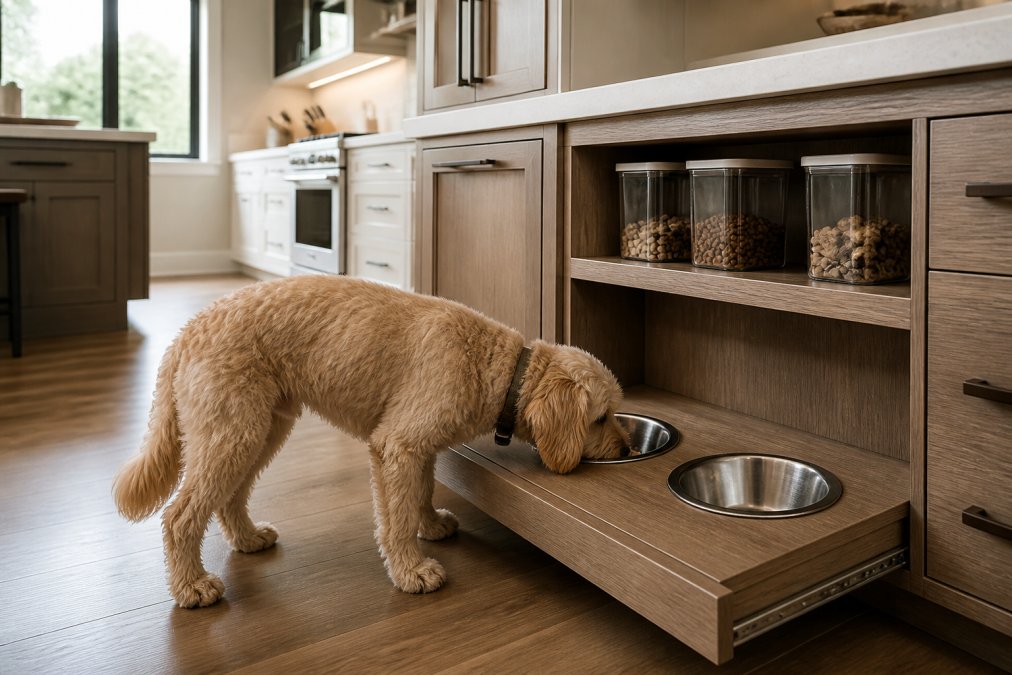
How to Organize Pet Supplies in Your Home
Choose a location that's easy to clean and away from main living areas if possible, the kitchen, mudroom, laundry room, or hallway all work. Think about what needs to live there: food and water bowls, food storage, cleaning supplies, grooming tools, leashes, and waste bags.
A tiered approach works well. The bottom tier holds food and water bowls. The second tier is food storage in airtight containers. The third tier is a small cabinet or drawer for grooming supplies, medications, and cleaning supplies. This vertical organization saves floor space and keeps everything functional.
Custom Storage Solutions That Look Intentional
Custom storage doesn't mean expensive, it means purposeful. A simple wooden bench with hooks underneath and a shelf above creates a feeding station that looks like part of your home's design. Built-in cabinetry is the luxury option. If custom work isn't in your budget, look for furniture pieces designed specifically for pet storage: elevated feeders with storage underneath, console tables with pet supply drawers, or repurposed bar carts.
5. Create Functional Pet Spaces That Blend With Your Decor
Pet beds and climbing shelves don't have to look like pet products. They can be design features that happen to serve your pet.
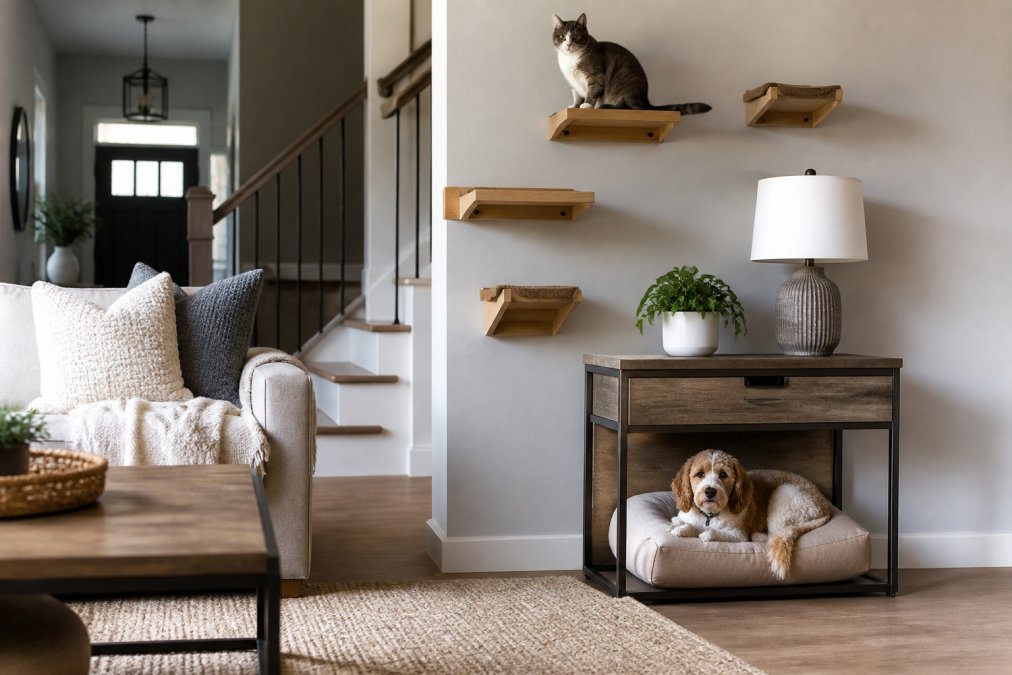
Cat Climbing Shelves and Wall-Mounted Furniture
Cats need vertical space. Wall-mounted shelves solve this problem while adding visual interest. Floating wooden shelves in natural wood or painted finishes look like intentional decor, not pet furniture. Arrange them at varying heights and add decorative objects alongside the cat bed.
Catification, creating climbing and resting spaces for cats, has become a legitimate interior design category. A cat with appropriate climbing space is less destructive to furniture and curtains and more active and engaged.
Dog Beds and Cozy Nooks as Design Features
Dog beds don't have to be utilitarian rectangles. Elevated dog beds with wood frames look like furniture. Dog crates covered with fabric panels become cozy nooks that blend into your living room. A dog bed tucked under a console table becomes part of the room's layout rather than a visible pet product.
Choose materials and colors that match your home's palette. A gray linen dog bed fits seamlessly into a neutral living room. Size matters too, measure your dog in its sleeping position and choose a bed that fits comfortably without excess fabric.
6. Use Pet-Safe Plants and Non-Toxic Decor
Many common houseplants are toxic to pets. Lilies, sago palms, oleander, and dieffenbachia are beautiful but dangerous if ingested. Pet-safe alternatives include spider plants, Boston ferns, African violets, and prayer plants.
Beyond plants, evaluate your decor for anything toxic. Some candles release harmful chemicals. Certain cleaning products used on wood furniture can be dangerous if pets lick the surface. Essential oil diffusers can be problematic for cats.
7. Implement Practical Maintenance Strategies
Even with the best materials and design, a pet-friendly home requires maintenance. Good design makes maintenance easier, not harder.
Grooming Stations and Paw Cleaning Areas
A grooming station near your home's entrance prevents dirt and moisture from spreading throughout. A simple setup includes a towel rack, a small mat, and cleaning supplies for paws and fur. The best grooming stations are integrated into your home's design, a mudroom with hooks and a mat, or a console table with a drawer for grooming supplies.
Paw cleaning is essential if you have dogs. After outdoor time, a quick paw wash prevents dirt from being tracked through your home.
Budget-Friendly DIY Pet Decor Hacks
Not every solution requires a designer or custom build. A low bookshelf becomes a cat climbing structure. A storage ottoman becomes a dog bed with hidden storage. A wooden ladder leaned against a wall becomes a cat climbing feature.
Repurpose items from other areas: a wooden crate becomes a dog bed frame, a decorative rug defines a pet space, a tension rod and fabric create a privacy screen for a litter box. Paint and fabric spray transform cheap pet products into something matching your decor.
| Pet Decor Strategy | Best For | Budget Range | Durability |
|---|---|---|---|
| Performance Fabrics | Sofas and upholstered furniture | $200-400 premium | 10+ years |
| Slipcovers | Existing furniture protection | $100-300 | 3-5 years |
| Wool Blend Rugs | High-traffic areas | $150-400 | 8-10 years |
| Luxury Vinyl Plank | Kitchens and bathrooms | $2-5 per sq ft | 15-20 years |
| Custom Feeding Stations | Kitchen and mudroom | $300-2000+ | Permanent |
| Wall-Mounted Cat Shelves | Vertical space | $50-300 | 10+ years |
| Elevated Dog Beds | Living rooms and bedrooms | $80-300 | 5-7 years |
Creating a pet-friendly home doesn't mean sacrificing style or breaking your budget. It means making intentional choices about materials, layout, and storage that work for both your aesthetic vision and your pet's needs. Spending on pet-friendly features is growing, reflecting a fundamental shift in how we think about home design.
Start with one area. Choose durable fabrics for your sofa. Install better flooring in your kitchen. Build a feeding station that looks intentional. Each change compounds, and within months, you'll have a home that works beautifully for everyone in it. Downtown5 offers a curated selection of pet-friendly home goods, from durable rugs like our hand-woven runner at $178.80 to storage solutions and accessories, designed to help you create a space that's both stylish and practical. The goal isn't a home that looks like a pet store. It's a home where pets belong as naturally as the furniture does.
=== FAQ ANSWERS (audit these too, same rules) ===
[1] Q: What are the best fabrics for pet-friendly furniture? A: Performance fabrics like Crypton, Sunbrella, and stain-resistant velvet are ideal for pet owners. These materials repel stains, moisture, and odors while maintaining a luxurious appearance. Wool blends and tightly woven upholstery also work well, they resist pilling and hide pet hair effectively. Avoid delicate fabrics like silk or linen if you have active pets. Look for textiles labeled as washable or treated with stain-resistant finishes to simplify maintenance.
[2] Q: How do I keep my home looking stylish with pets? A: Integrate pet spaces into your overall design rather than hiding them. Choose neutral, calming color palettes (warm neutrals, soft sand, muted blush, deeper earth tones) that complement both your decor and pet fur. Invest in durable rugs with patterns that hide stains and fur. Use slipcovers on furniture for easy cleaning and style flexibility. Select pet accessories in colors and materials that match your interior aesthetic, 78% of pet owners consider aesthetics when choosing pet accessories, so design-forward options are readily available.
[3] Q: What are the most durable flooring options for pet owners? A: Luxury vinyl planks (LVP), polished concrete, and sealed tile are top choices for pet homes. These materials resist scratches, are easy to clean, and provide traction to prevent slips. Engineered hardwood with protective finishes offers warmth while resisting damage. Avoid soft woods and light-colored floors that show scratches easily. Ensure your flooring provides adequate grip for your pets' safety, especially for senior or mobility-impaired animals.
[4] Q: How can I hide pet supplies in my home decor? A: Custom storage solutions integrate pet supplies seamlessly into your space. Build dedicated cabinetry with deep drawers for pet food storage, as shown in modern kitchen renovations. Use decorative baskets or woven bins to store toys and blankets while keeping them accessible. Install wall-mounted shelving or corner units for litter box enclosures that double as design features. A foldable dog playpen with carrying bag, like Downtown5's option at $93.80, provides practical storage when not in use. The key is choosing storage that matches your existing decor style and color palette.
[5] Q: Are there specific indoor plants that are safe for pets? A: Yes, many beautiful plants are non-toxic to dogs and cats. Safe options include spider plants, Boston ferns, parlor palms, bamboo palms, and African violets. These add greenery to your space without posing health risks. Avoid toxic plants like lilies, sago palms, oleander, and dieffenbachia, which can cause serious illness if ingested. Place plants on high shelves or wall-mounted planters to keep them out of reach. Consider your pet's chewing habits when selecting placement, and research each plant's toxicity level before bringing it home.
Frequently Asked Questions
What are the best fabrics for pet-friendly furniture?
Performance fabrics like Crypton, Sunbrella, and stain-resistant velvet are ideal for pet owners. These materials repel stains, moisture, and odors while maintaining a luxurious appearance. Wool blends and tightly woven upholstery also work well, they resist pilling and hide pet hair effectively. Avoid delicate fabrics like silk or linen if you have active pets. Look for textiles labeled as washable or treated with stain-resistant finishes to simplify maintenance.
How do I keep my home looking stylish with pets?
Integrate pet spaces into your overall design rather than hiding them. Choose neutral, calming color palettes (warm neutrals, soft sand, muted blush, deeper earth tones) that complement both your decor and pet fur. Invest in durable rugs with patterns that hide stains and fur. Use slipcovers on furniture for easy cleaning and style flexibility. Select pet accessories in colors and materials that match your interior aesthetic, 78% of pet owners consider aesthetics when choosing pet accessories, so design-forward options are readily available.
What are the most durable flooring options for pet owners?
Luxury vinyl planks (LVP), polished concrete, and sealed tile are top choices for pet homes. These materials resist scratches, are easy to clean, and provide traction to prevent slips. Engineered hardwood with protective finishes offers warmth while resisting damage. Avoid soft woods and light-colored floors that show scratches easily. Ensure your flooring provides adequate grip for your pets' safety, especially for senior or mobility-impaired animals.
How can I hide pet supplies in my home decor?
Custom storage solutions integrate pet supplies seamlessly into your space. Build dedicated cabinetry with deep drawers for pet food storage, as shown in modern kitchen renovations. Use decorative baskets or woven bins to store toys and blankets while keeping them accessible. Install wall-mounted shelving or corner units for litter box enclosures that double as design features. A foldable dog playpen with carrying bag, like Downtown5's option at $93.80, provides practical storage when not in use. The key is choosing storage that matches your existing decor style and color palette.
Are there specific indoor plants that are safe for pets?
Yes, many beautiful plants are non-toxic to dogs and cats. Safe options include spider plants, Boston ferns, parlor palms, bamboo palms, and African violets. These add greenery to your space without posing health risks. Avoid toxic plants like lilies, sago palms, oleander, and dieffenbachia, which can cause serious illness if ingested. Place plants on high shelves or wall-mounted planters to keep them out of reach. Consider your pet's chewing habits when selecting placement, and research each plant's toxicity level before bringing it home.
This article was written using GrandRanker