

How to Style a Rental Apartment Without Painting
Table of Contents
- Why Rental Apartment Styling Doesn't Require a Paintbrush
- Renter-Friendly Wall Decor That Adds Instant Character
- Peel and Stick Wallpaper Ideas That Transform a Room
- The Best Lighting for Rentals: Swap Fixtures, Not Wiring
- Temporary Flooring Solutions for Apartments That Look Permanent
- How to Style a Rental Apartment Without Painting: Layering Rugs and Furniture
- Common Mistakes to Avoid When Styling a Rental
- Conclusion
- Frequently Asked Questions
Last Updated: September 15, 2026
Why Rental Apartment Styling Doesn't Require a Paintbrush
Learning how to style a rental apartment without painting starts with one realization: the lease isn't the obstacle, the wrong materials are. Lease agreements almost always restrict paint because it's hard to reverse, but the renter-friendly decor market has exploded with products designed to go up and come down cleanly. This guide from Downtown5 walks through the wall treatments, lighting swaps, and flooring options that deliver a designed look without a single coat of paint.
The stakes are real. A common mistake is treating a rental as temporary, so the space never feels finished, and the deposit still takes the hit from hasty nail holes and adhesive residue. The better approach is to choose reversible products, install them carefully, and treat the apartment like a home you'll actually enjoy.
Here's the good news: the highest-impact changes, wall decor, lighting, and floor layering, are also the most reversible.
Renter-Friendly Wall Decor That Adds Instant Character
Renter-friendly wall decor is any wall treatment that adds visual interest without permanent fasteners or surface damage. The category covers adhesive hooks, removable frames, peel-and-stick trim, and tension-mounted systems, all of which install in minutes and remove without tools.
The trick is matching the product to the wall. Adhesive strips hold best on smooth, painted drywall and struggle on textured plaster or freshly painted surfaces that haven't fully cured. Test one strip in a hidden corner first, wait a day, then commit.
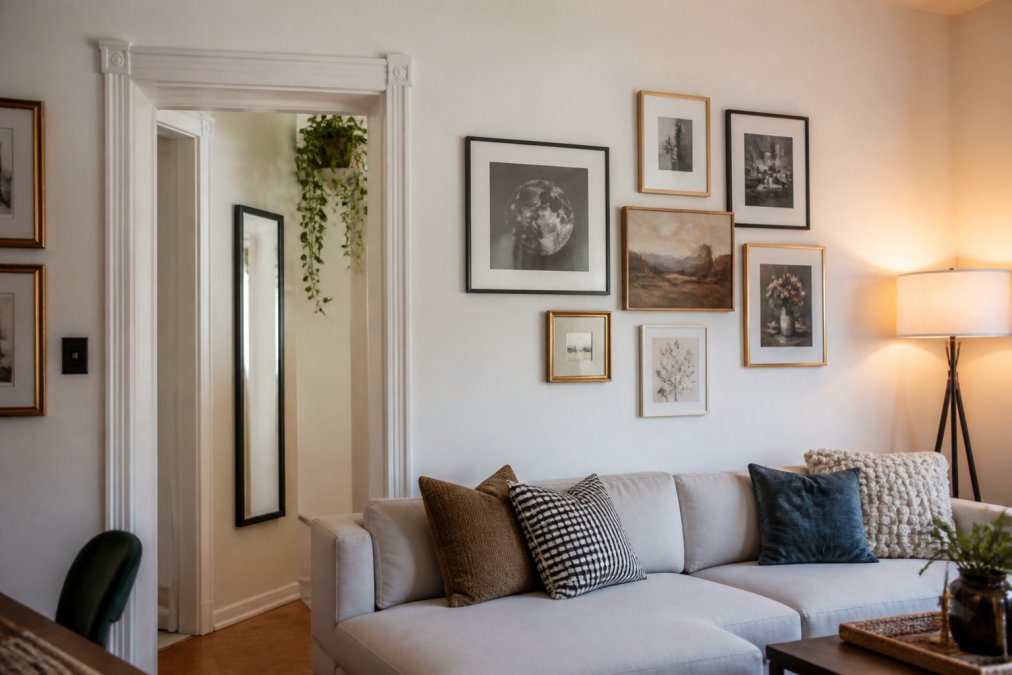
Gallery Walls Without Nails
Gallery walls work fine without nails if you use the right hardware. Adhesive picture strips rated for the frame's weight handle most lightweight art, and removable putty works for unframed prints. The rule that matters: keep individual pieces under a few pounds, and space strips according to the manufacturer's weight chart rather than guessing.
Lay the arrangement out on the floor first. Renters who skip this step end up patching a dozen misplaced holes, or in this case, peeling and re-sticking strips until the adhesive weakens.
Peel-and-Stick Molding and Trim
Peel-and-stick molding kits add architectural detail without tools or permanent commitment, which is exactly why they've become a staple of rental upgrades. A strip of lightweight trim above a doorway or along a plain wall reads as built-in millwork from across the room.
The finish matters more than the brand. Matte white trim blends into most wall colors; anything glossy reflects light and highlights seams. Wipe the wall with a damp cloth and let it dry completely before applying, because dust is the number one reason trim lifts at the edges.
Peel and Stick Wallpaper Ideas That Transform a Room
Peel and stick wallpaper ideas work best when they target one focal surface instead of an entire room. A single accent wall behind a bed or sofa delivers the transformation; wrapping all four walls in a bold pattern usually overwhelms a small apartment and makes removal a weekend project.

Pattern choice drives the result. Large-scale geometrics and faux textures read as intentional design, while small busy prints can look like contact paper. For a polished, high-end look, a marble-effect tile pattern on a kitchen backsplash or bathroom wall mimics real stone at a fraction of the cost, like this Modern Green Marble Stone Tile Peel And Stick Wallpaper.
Choosing Truly Removable Wallpaper
Not every peel-and-stick product is genuinely removable, and that distinction protects your deposit. As Style by Emily Henderson's guidance on temporary wall treatments notes, temporary wallpaper and murals require careful selection to ensure they come off cleanly and don't damage the surface underneath.
Check three things before buying: the product is labeled removable or repositionable, it's recommended for your wall type, and reviews mention clean removal after months of wear. Skip anything described only as "self-adhesive" with no removal claim.
The Best Lighting for Rentals: Swap Fixtures, Not Wiring
The best lighting for rentals comes from swapping fixtures and adding freestanding lamps, never from touching the wiring. Most leases allow you to change a light fixture as long as you store the original and reinstall it at move-out, and that single swap changes a room more than any other reversible upgrade.
For anything hardwired, turn off the breaker and keep the original fixture in a labeled box. If your lease prohibits fixture changes entirely, floor and table lamps do the same job. A Floor Lamp with a linen shade and remote control softens harsh overhead light and adds a warm anchor to a reading corner.
For a bolder statement, a 5 Light Modern Black Iron Sphere Chandelier replaces a builder-grade ceiling fixture with an open-cage design that reads vintage or industrial depending on the bulbs you choose. Swap in warm-white LEDs and the whole room shifts.

| Lighting Option | Install Effort | Reversible? | Best For |
|---|---|---|---|
| Swap ceiling fixture | Moderate, breaker off | Yes, reinstall original | Rooms with dated builder fixtures |
| Floor lamp | None | Yes | Reading corners, dark rooms |
| Table lamps | None | Yes | Bedside, console styling |
| Plug-in sconces | Low | Yes | Bedroom walls, no wiring |
Temporary Flooring Solutions for Apartments That Look Permanent
Temporary flooring solutions for apartments fall into two camps: peel-and-stick tiles and planks for hard surfaces, and layered rugs for everything else. Both install without adhesive that damages the subfloor, and both come up cleanly when you move.
Peel-and-stick vinyl planks work well over existing tile or linoleum in kitchens and bathrooms. Clean the floor thoroughly, let it dry, and press each plank firmly. Skip this step and edges curl within weeks.
Rugs do more work for less effort. Layering a large area rug over wall-to-wall carpet instantly defines a zone, hides wear, and adds color without touching the floor underneath.
How to Style a Rental Apartment Without Painting: Layering Rugs and Furniture
Layering is the single technique that makes a rental look designed rather than furnished. Area rugs are a primary tool for creating distinct zones in open-plan layouts while adding texture and color, according to Roomagine's 2026 guidance on spatial layering. A studio with one rug reads as one room; the same studio with two rugs reads as a living area and a sleeping area.
Start with furniture placement, not decor. Float the sofa away from the wall to define the living zone, then anchor it with a rug large enough that the front legs sit on it. Add a second, smaller rug in the sleeping or dining zone to reinforce the separation.
Storage doubles as styling. A Multifunctional Clothes Rail and Shoe Rack in an entryway or bedroom keeps clutter contained and reads as intentional furniture rather than a plastic bin. Clean lines and a simple frame suit nearly any style, which matters when you're layering pieces from different sources.

Common Mistakes to Avoid When Styling a Rental
The most expensive rental styling mistakes are the ones that cost you the deposit. Ranked by how often they show up in move-out disputes, here's what to avoid:
- Skipping the patch test. Always test adhesive products on a hidden spot for 24 hours before committing to a full wall.
- Over-patterning small rooms. One bold surface per room is the ceiling; two competing patterns make a space feel smaller.
- Ignoring weight limits. Adhesive hooks and strips fail when overloaded, and the falling frame does more damage than a nail would have.
- Buying before measuring. Measure the wall, the rug zone, and the ceiling height before ordering anything.
- Removing adhesive products too fast. Pull slowly and at a low angle, following the manufacturer's removal instructions, to avoid taking paint with them.
Conclusion
Styling a rental without paint comes down to choosing reversible products, installing them with care, and layering rather than committing.
Frequently Asked Questions
What is the 3-5-7 rule in decorating?
The 3-5-7 rule is a guideline for arranging accessories and decor items in odd-numbered groupings. You might place three candles on a coffee table, five books on a shelf, or seven small plants along a windowsill. Odd numbers create visual balance because the eye doesn't pair them symmetrically. This works especially well in rental apartment styling where you're layering renter-friendly wall decor and tabletop accents without making permanent changes.
Can I use peel-and-stick wallpaper in a rental?
Yes, peel-and-stick wallpaper is one of the most popular renter-friendly upgrades. The key is choosing a product specifically labeled as removable and testing it on a small hidden area first. Some low-quality options can peel paint or leave residue. Look for wallpaper with a smooth, matte finish and apply it to clean, fully cured walls. Peel and stick wallpaper ideas range from marble tile patterns for kitchen backsplashes to subtle textures for bedroom accent walls.
How do you cover ugly rental floors without permanent changes?
Large area rugs are the most effective temporary flooring solution for apartments. A rug sized 8x10 feet or larger can cover most of a living room floor, hiding stained carpet or dated tile. For kitchens and bathrooms, peel-and-stick floor tiles offer a removable option that withstands moisture. Layer a flat-weave rug over carpet to add texture and color while protecting the flooring underneath from further wear.
What are the best ways to improve rental lighting?
The best lighting for rentals involves swapping out dated fixtures with plug-in or ceiling-mounted options you can take with you. A floor lamp with an adjustable linen shade and remote control adds soft, dimmable light without touching the wiring. For overhead fixtures, a modern chandelier with an open cage design can replace a basic builder-grade dome light in minutes using existing ceiling wiring, and you simply reinstall the original when you move out.