

How to Organize a Small Pantry Effectively with Containers
Table of Contents
- Step 1: Empty, Sort, and Measure Your Small Pantry
- Step 2: Choose the Best Pantry Storage Containers for Small Spaces
- Step 3: Zone Your Pantry with Pantry Organization Ideas for Small Kitchens
- Step 4: How to Label Pantry Containers (So You Actually Keep It Up)
- Step 5: Maximize Vertical Space with Bins and Racks
- Common Mistakes to Avoid When Organizing a Small Pantry
- Frequently Asked Questions
Last Updated: September 27, 2026
Step 1: Empty, Sort, and Measure Your Small Pantry
Learning how to organize a small pantry effectively with containers starts with a clean slate, not a shopping spree. Pull everything out, group it, and measure your shelves before you buy a single bin. This one step prevents the most common mistake: buying containers that don't fit.
Here's the process:
- Empty every shelf and stack items on the counter
- Sort into groups: baking, snacks, canned goods, spices
- Toss anything expired or never used
- Measure shelf height, depth, and width with a tape measure
Write those numbers down. You'll need them in the next step.
Step 2: Choose the Best Pantry Storage Containers for Small Spaces
The best pantry storage containers for small spaces are clear, stackable, and sized to your exact shelf measurements. Clear containers let you see what's inside without opening them, which cuts down on duplicate purchases and food waste, according to IKEA's pantry storage guidance.
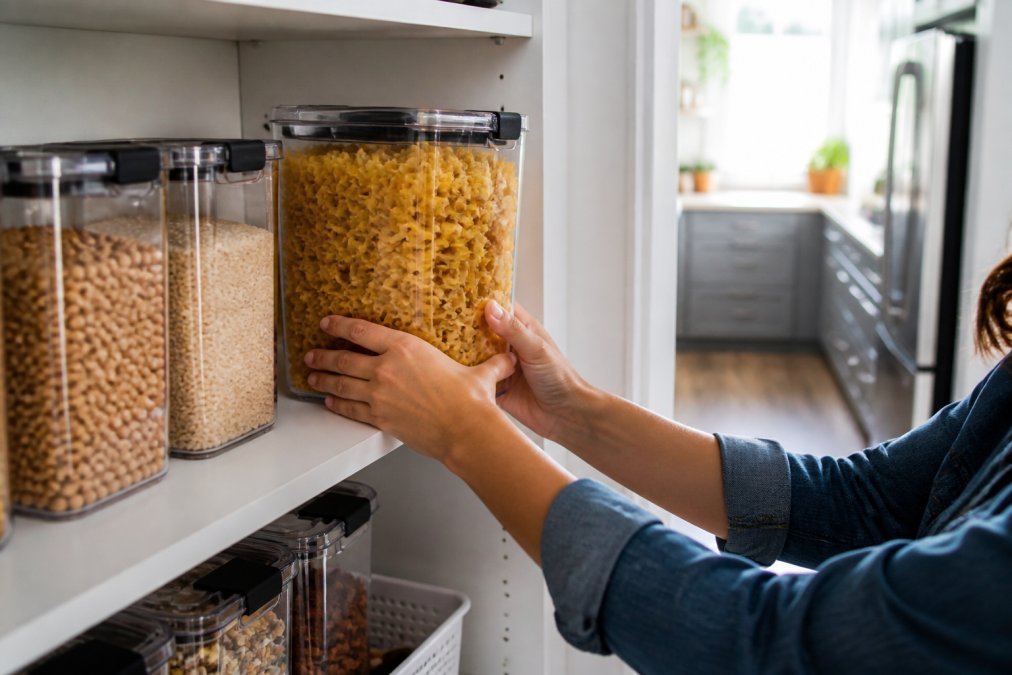
Focus on three things:
- Shape: Square containers use corner space; round ones don't
- Material: Airtight seals keep cereal and flour fresh
- Stackability: Stackable bins double your usable shelf area
Clear vs. Opaque Containers: Which Works Better?
Clear containers win for most small pantries because you can see inventory at a glance. Opaque containers hide clutter, which helps in open shelving. For a small pantry, visibility matters more than looks. You need to know what you have before you shop.
Step 3: Zone Your Pantry with Pantry Organization Ideas for Small Kitchens
Good pantry organization ideas for small kitchens come down to zoning. Group similar items in the same spot so your pantry works like a mini grocery store. Organic Cotton Mart's organization guide notes that grouping similar items is a primary method for keeping a kitchen clutter-free.
Try these zones:
- Baking zone: flour, sugar, cocoa on one shelf
- Snack zone: kid-friendly, low enough to reach
- Canned goods zone: heaviest items on the bottom
- Spice zone: near the stove or prep area
Keep the items you use daily at eye level. Put the once-a-month stuff up high.
Step 4: How to Label Pantry Containers (So You Actually Keep It Up)
Knowing how to label pantry containers is what keeps your system alive after week one. A label tells everyone in the house where things go, so the pantry stays organized without you policing it.
Stick to these rules:
Wall Mounted Storage Bins, 48-Bin Parts →
- Label the contents, not the container
- Add a use-by date for opened items
- Use removable labels so you can reuse bins
- Keep a marker nearby for quick updates
A simple label maker or plain masking tape works fine. Consistency matters more than style.
Step 5: Maximize Vertical Space with Bins and Racks
Vertical space is the most wasted resource in a small pantry. Stacking and risers can nearly double what you store without adding a single shelf.
Use these tools:
- Stackable bins to build upward
- Shelf risers to see cans behind cans
- Over-door racks for lids and wraps
- Turntables for sauces and oils
For hard-to-reach spots, a wall-mounted bin rack keeps small items visible and off the shelf. Downtown5 carries a 48-bin wall-mounted organizer that works well for spice packets, tea bags, and small odds and ends.

Common Mistakes to Avoid When Organizing a Small Pantry
The biggest mistake is buying containers before you measure. It leads to mismatched bins, wasted money, and a pantry that looks worse than before.
Watch for these traps:
- Buying a matching set that doesn't fit your shelves
- Overfilling containers so lids won't seal
- Skipping labels, then forgetting what's inside
- Storing heavy items up high
- Organizing once and never adjusting
A small pantry needs a system you can maintain, not a one-time makeover. Recheck it every few months and adjust as your grocery habits change.
| Mistake | Fix | Why It Matters |
|---|---|---|
| Buying before measuring | Measure shelves first | Prevents wasted money |
| Overfilled containers | Leave 1 inch of headroom | Keeps seals airtight |
| No labels | Label contents and dates | Stops duplicate buys |
| Heavy items up high | Move weight to bottom | Safer, easier access |
A small pantry can still work hard if you build the right system. At Downtown5, we stock the storage bins, racks, and home goods that make it easy, with high-quality products, seamless shipping, and real value. Start with the 48-bin wall-mounted organizer or browse our full storage range. Get started with Downtown5 and turn your cramped pantry into a space that finally works.

Frequently Asked Questions
What are the best types of containers for a small pantry?
Clear, stackable containers with airtight seals work best for a small pantry. They let you see what you have without pulling everything off the shelf, which helps you avoid buying duplicates and reduces food waste. Square or rectangular shapes use shelf space more efficiently than round ones. For dry goods like flour, cereal, and snacks, choose containers that stack vertically. Measure your shelf depth and height before buying so containers fit without wasted gaps.
Should I use clear or opaque containers for pantry organization?
Clear containers are the better choice for a small pantry. Clear containers allow users to see inventory levels, which helps with planning grocery runs, avoiding overspending, and reducing food waste. In a tight space, being able to glance at a shelf and know exactly what you have saves time and prevents overbuying. Opaque containers can work for items you want to hide, like snacks you're trying to ration, but they require labeling and regular checking. Most small-pantry setups benefit from clear containers paired with simple labels for dates and contents.
How do I keep my pantry organized after using containers?
Zoning and categorization are the primary methods for maintaining a clutter-free kitchen, according to Organic Cotton Mart. Group similar items together, such as baking supplies in one zone and snacks in another. This makes it obvious when something is out of place. Also, do a quick five-minute reset each week: put stray items back in their zones, wipe down shelves, and check for expired food. When every container has a designated spot, family members are more likely to put things back correctly. Labeling shelves or bins reinforces the system without nagging.
Are airtight containers worth the investment for a small pantry?
Airtight containers protect dry goods from moisture, pests, and stale air, which matters more in a small pantry where items sit close together. They also stack neatly, so you get more usable shelf space than with bags and boxes. Start with a few sizes that match your most common items, like cereal, flour, and snacks, rather than buying a full set before you know what fits.