

How to Furnish Your First Apartment: 2026 Guide
Table of Contents
- How to Furnish Your First Apartment: Where to Start
- Your Complete Apartment Furniture Checklist
- Essential Furniture for Small Apartments
- How to Budget for Apartment Furniture Without Overspending
- Renter-Friendly Decorating and Safety Tips
- Sustainable Furnishing and Caring for Budget Furniture
- How to Furnish Your First Apartment on a Tight Timeline
- Conclusion
Last Updated: August 18, 2026
How to Furnish Your First Apartment: Where to Start
Learning how to furnish your first apartment is one of those tasks that looks simple until you're standing in an empty room with a measuring tape and a budget that evaporates faster than you expect. The biggest mistake most first-time renters make is buying furniture before they understand their space, a sofa that looked right online can block a doorway or shrink a room.
Measure Your Space Before You Buy Anything
Measuring your space is the single most important step before purchasing any furniture. Sketch a rough floor plan of each room, noting the location of doors, windows, outlets, and fixed features like radiators or built-in shelving. Record the dimensions of each wall and ceiling height. Standard doorway widths run around 32 to 36 inches, which matters when ordering a sectional sofa or bed frame. Use painter's tape on the floor to simulate furniture footprints before you commit, this trick costs nothing and immediately shows whether a dining table leaves enough clearance for chairs to pull out comfortably.
Prioritizing Needs vs. Wants on Move-In Day
On move-in day, the priority list is short: a place to sleep, a place to sit, and something to eat on. Everything else is a want. The most common regret among first-time renters is spending too much too fast on decorative pieces before the functional foundation is in place. Build in phases: Phase one covers sleep, seating, and eating. Phase two handles storage and lighting. Phase three is where aesthetics come in: area rugs, soft furnishings, wall art, and accent pieces. This approach gives you time to understand how you actually live in the space before locking in a specific aesthetic.
Your Complete Apartment Furniture Checklist
An apartment furniture checklist is a prioritized list of the furniture and essentials a first-time renter needs to function comfortably in a new space, organized by room and urgency. Having a checklist prevents the expensive habit of buying things twice because you forgot something critical.
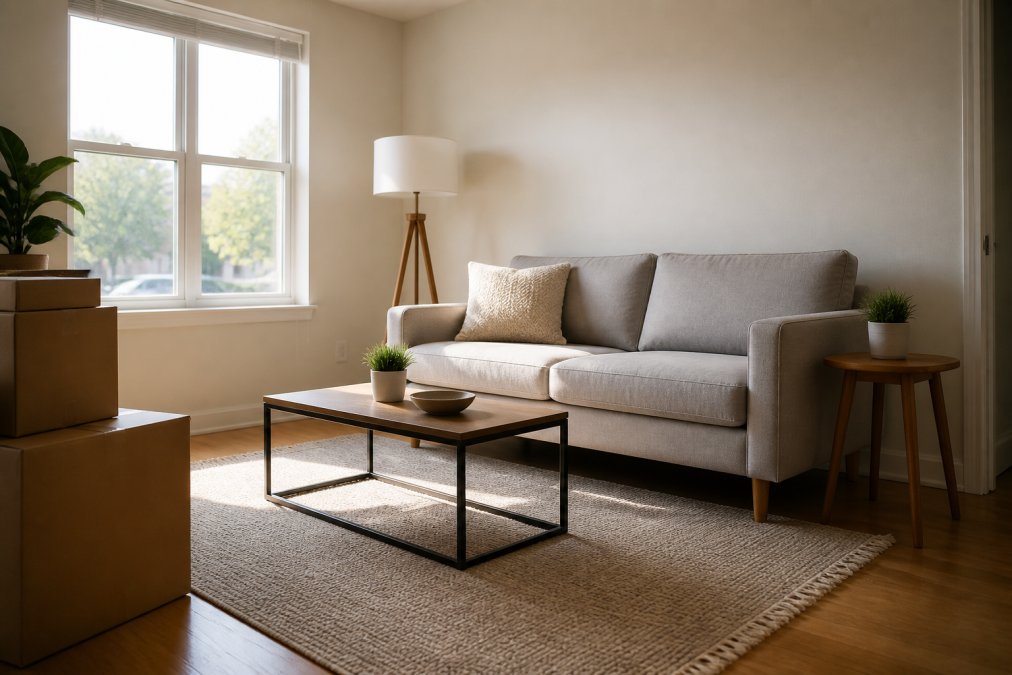
Bedroom Essentials
The bedroom deserves the largest portion of your furniture budget. A mattress is the one piece where cutting corners has a direct cost to your health and productivity.
Bedroom priority list:
- Mattress (non-negotiable, buy the best you can afford)
- Bed frame with headboard or storage drawers
- Bedside table or side table
- Dresser or chest of drawers for clothing storage
- Closet organizer if built-in storage is limited
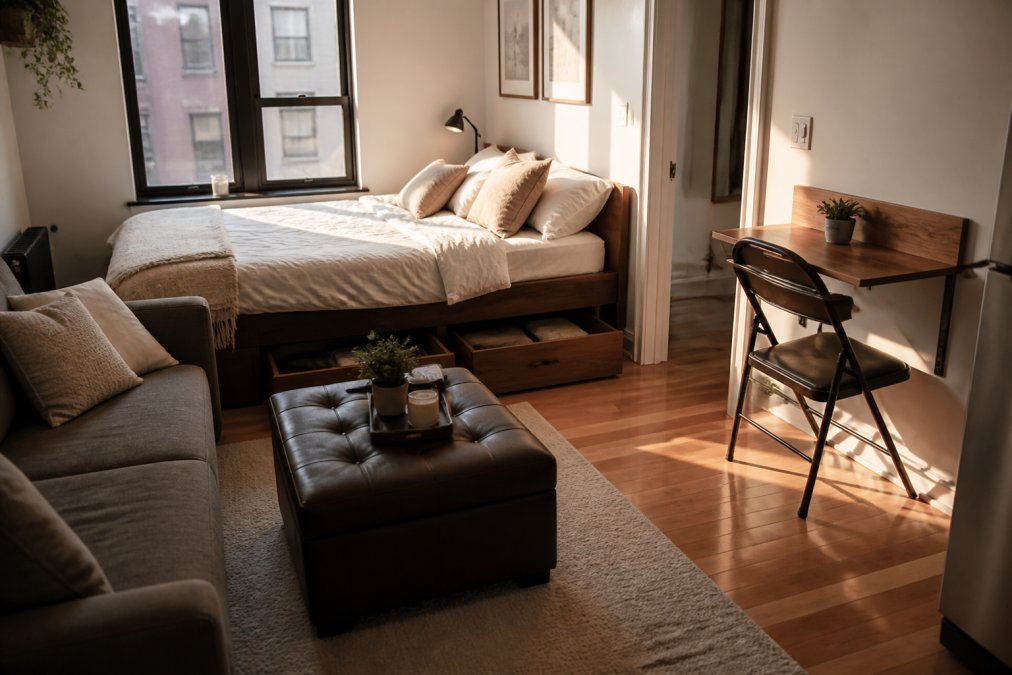
A bed frame with under-bed storage drawers is one of the smartest investments in a small apartment, gaining meaningful storage without adding another piece to the floor plan.
Living Room Essentials
The living room carries the most visual weight in any apartment and is where you'll spend most of your waking hours at home.
Living room priority list:
- Sofa or loveseat (sized to your floor plan, not your wishlist)
- Coffee table or storage ottoman
- Media console or TV stand
- Floor lamp for ambient lighting
- Area rug to anchor the seating zone
- Accent chair if space allows
A storage ottoman does double duty as a coffee table and hidden storage. The area rug defines the seating area, adds warmth, and makes a furnished room feel intentional rather than assembled.
Kitchen and Dining Essentials
Many first apartments have limited kitchen storage, so the dining area needs to work efficiently.
Kitchen and dining priority list:
- Dining table scaled to your space (a round table works better in tight rooms)
- Dining chairs (2-4 depending on how often you host)
- Bar cart or small sideboard for extra storage
- Kitchen mat for comfort while cooking
A fold-down wall-mounted dining table is worth considering if your kitchen is genuinely small, disappearing when not in use and reclaiming floor space.
Essential Furniture for Small Apartments
Small-space furnishing is a discipline, not a compromise. The goal is to make every square foot earn its place.
Multi-Functional Pieces That Save Space
Multi-functional furniture serves two or more purposes, reducing the total number of items needed in a small living space. The pieces that consistently deliver the most value in compact apartments include sofa beds or daybeds, storage ottomans, bed frames with drawers, nesting tables, and bookshelf room dividers. Buy these pieces because your specific floor plan demands them, not just because they're clever.
Small-Space Ergonomics and Layout Planning
Ergonomics in a small apartment is about more than comfort. Poor layout creates friction in your daily routine that compounds over time. Maintain clear circulation paths with a minimum of 36 inches between major pieces of furniture. Lighting matters more in small spaces than large ones, layer your lighting with a floor lamp in one corner, a table lamp on the bedside table, and task lighting in the kitchen. This approach makes a room feel larger and more functional. Position your desk or workspace near natural light if possible to reduce eye strain.
How to Budget for Apartment Furniture Without Overspending
Budgeting for apartment furniture means allocating your total furnishing spend across categories before you start shopping. Divide your total furnishing budget into three buckets: roughly half goes to bedroom and living room essentials, about a quarter goes to kitchen, dining, and storage, and the remaining quarter covers soft furnishings, lighting, and decor. Adjust percentages based on what you already own.
Investment Pieces vs. Budget-Friendly Buys
Not all furniture deserves equal investment. Pieces you interact with daily and that take the most physical stress are where quality pays off. Pieces that are purely visual or replaced frequently are where budget options make sense.
| Piece | Recommendation | Why |
|---|---|---|
| Mattress | Invest | Directly affects sleep and health |
| Sofa | Invest | High daily use, expensive to replace |
| Bed frame | Mid-range | Longevity matters, but options are wide |
| Dining chairs | Budget-friendly | Easy to replace as style evolves |
| Area rug | Mid-range | Anchors the room, worth durability |
| Accent pieces | Budget-friendly | Trend-driven, swap out often |
| Floor lamp | Budget-friendly | Wide range of good options at lower prices |
| Media console | Mid-range | Visible daily, worth buying well |
The frame and joinery matter more than upholstery. A sofa with a solid hardwood frame and poor fabric can be reupholstered. A sofa with a poor frame is trash in three years.
Where to Buy Affordable Furniture
Affordable furniture exists at every price point if you know where to look. Second-hand and thrift stores are ideal for solid wood pieces, bookshelves, dressers, and dining chairs. Online marketplaces work well for mid-range pieces from people who are moving or downsizing. Flat-pack retailers are reliable for budget-friendly basics. Downtown5 offers a curated selection of home goods, soft furnishings, and living room accents with seamless shipping, designed for first-time renters who want quality without the department-store markup. The smartest approach is to mix sources deliberately: buy your mattress and sofa new, source your dresser, dining chairs, and accent pieces second-hand.
Renter-Friendly Decorating and Safety Tips
Renter-friendly decorating means personalizing your apartment without damaging the property or risking your security deposit. Command strips and adhesive hooks handle most wall hanging needs without putting holes in drywall. For heavier items, use proper wall anchors and fill holes cleanly before move-out. Furniture placement is your most powerful decorating tool and costs nothing, angling a sofa slightly, floating furniture away from walls, and creating distinct zones all make a dramatic visual difference.
For safety, anchor tall furniture like bookshelves and dressers to the wall using anti-tip straps. This is especially important in apartments with children or pets. Avoid blocking electrical outlets or covering them with rugs. Keep pathways to doors and windows clear for daily comfort and basic fire safety.
Sustainable Furnishing and Caring for Budget Furniture
Sustainable furnishing is the practice of selecting, maintaining, and eventually disposing of furniture in ways that reduce environmental impact and extend product lifespan. For first-time renters, it's also the most cost-effective long-term approach. Buying second-hand is the most impactful sustainable choice available. Many solid wood pieces found at thrift stores are decades old and will outlast anything made from particleboard.
For budget furniture that's new, maintenance makes the difference between a piece that lasts two years and one that lasts ten. Wipe up spills immediately, tighten hardware quarterly, rotate cushions every few months, use coasters and placemats on wood surfaces, and condition leather twice a year. Decluttering before you move in is also part of sustainable furnishing, bringing less into the apartment means buying less and living more intentionally.
How to Furnish Your First Apartment on a Tight Timeline
Furnishing your first apartment quickly without overspending requires a clear sequence and discipline. Most people who furnish fast end up buying things twice because they moved too quickly on pieces that didn't fit.
A practical five-step sequence for a tight timeline:
- Measure and sketch your floor plan before ordering anything. This takes two hours and prevents weeks of returns.
- Order your mattress first. Most mattresses ship compressed and need 24-48 hours to fully expand. Order before move-in day.
- Set up the bedroom completely before moving to any other room. Sleep quality during the transition period matters.
- Assemble the living room next. Sofa, media console, and lighting come before other rooms.
- Handle kitchen, dining, and storage last. These are easiest to improvise short-term and easiest to upgrade once you understand how you use the space.
Resist the urge to decorate during the first two weeks. Live in the space first, you'll learn where the light falls, which corners feel dead, and where you actually spend your time. For apartment essentials that ship quickly without sacrificing quality, Downtown5's home goods collection is built for exactly this scenario: curated pieces with seamless shipping, so your living space comes together on your schedule.
Furnishing a first apartment is one of the few moments where the decisions you make in a weekend shape how you live for the next year or more. The most common regret isn't spending too little, it's spending too fast. Take the floor plan seriously, buy the mattress first, and build the rest in phases. Downtown5 offers a curated selection of home goods and living room accents designed to make that process straightforward, with exceptional value and shipping that doesn't add stress to an already busy move.
Frequently Asked Questions
What is a good budget for furnishing my first apartment?
A realistic starting budget depends on your apartment size and how many pieces you need from scratch. Most first-time renters spend somewhere between $2,000 and $5,000 to cover the basics across every room, though you can spend less by mixing second-hand finds with a few investment pieces. Start by listing only what you need for move-in day, then add to your living space gradually. Check Downtown5 for current pricing on curated apartment essentials.
What furniture should I buy first when moving into a new apartment?
Prioritize sleep and daily function first. A mattress and bed frame are non-negotiable from day one. After that, focus on a sofa or seating for your living room, basic kitchen and dining setup, and adequate lighting. Storage solutions like a dresser or shelving unit should follow quickly. Decorative items, an accent chair, and an area rug can wait until your core apartment furniture checklist is complete and you have a clearer sense of your space.
How can I furnish an apartment for free or cheap?
Second-hand shopping is the fastest route to a furnished apartment on a minimal budget. Thrift stores, Facebook Marketplace, and neighborhood buy-nothing groups regularly have sofas, bed frames, dining tables, and soft furnishings at a fraction of retail cost. Friends and family moving or redecorating are another great source. For brand-new budget-friendly pieces, look for flat-pack furniture with straightforward assembly and shop end-of-season sales. Mixing second-hand finds with a few quality new pieces keeps costs low without sacrificing style.
Is $5,000 enough to furnish an apartment?
Yes, $5,000 is enough to furnish a one-bedroom apartment comfortably if you spend strategically. Allocate the largest share to your mattress and sofa, since those get the most daily use. Use second-hand sources or budget-friendly retailers for accent pieces, a media console, side tables, and soft furnishings like an area rug and floor lamp. Avoid buying everything at once; furnish room by room so you can adjust your spending as you learn how you actually use each space.
What are the most essential furniture pieces for a small apartment?
For a small apartment, every piece should do more than one job. A bed frame with built-in drawers replaces a dresser. A storage ottoman works as a coffee table and extra seating. A compact dining table that folds flat or doubles as a desk saves floor space. Wall-mounted shelving handles storage without eating into your floor plan. These multi-functional picks are the foundation of essential furniture for small apartments, keeping your living space functional without feeling cramped.
How do I furnish my first apartment without losing my security deposit?
Stick to renter-friendly modifications that don't require permanent changes. Use removable adhesive strips instead of nails for wall art and shelving. Choose freestanding furniture over built-ins. Anchor tall bookshelves to walls with furniture straps that use small screws, then patch the holes with a basic filler when you move out. Avoid spray paint or wallpaper that isn't specifically labeled as removable. Document the apartment's condition with photos before move-in day to protect yourself from pre-existing damage claims.
This article was written using GrandRanker