

How to Choose an Outdoor Dining Set Size (2026 Guide)
Table of Contents
- How to Measure Your Patio for Furniture
- Outdoor Dining Table Clearance Requirements You Can't Skip
- Outdoor Dining Set Seating Capacity Chart: Find Your Fit
- How to Choose Outdoor Dining Set Size for Your Space
- Round vs. Rectangular: Matching Table Shape to Your Patio
- Common Mistakes When Sizing an Outdoor Dining Set
- Conclusion: Your Perfect Outdoor Dining Set Awaits
- Frequently Asked Questions
Last Updated: September 26, 2026
How to Measure Your Patio for Furniture
Getting the right outdoor dining set size starts with one number: your usable patio space. According to HOM Furniture's patio planning guide, you need 36 inches of clearance on all sides of a table for walkways and chair movement.
Here's how to measure your patio in four steps:
- Measure the full length and width of your patio or deck
- Subtract 36 inches from each side for clearance
- Note door swings, grill zones, and planters
- Measure any narrow pinch points where guests will walk
That last step matters more than people think. A deck can be wide overall but still have a tight corner where chairs will bump the railing.
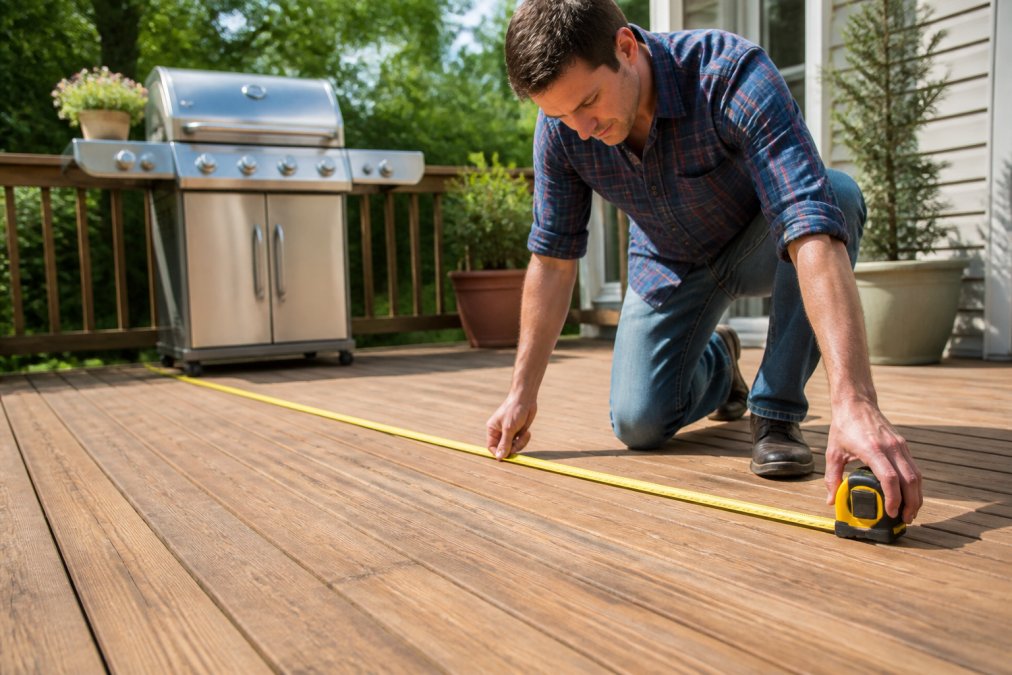
Write down your usable footprint before you shop. It's the single number that rules out half the sets you'll see online.
Outdoor Dining Table Clearance Requirements You Can't Skip
The minimum outdoor dining table clearance requirement is 36 inches between the table edge and any wall, railing, or planter. This gives guests room to pull out chairs and slide in without squeezing.
Skip this rule and you get the classic problem: a beautiful table no one can sit at comfortably. ATBBQ's outdoor furniture guidance warns that cramming oversized sets into small spaces leaves guests unable to enter or exit the seating area.
Two clearance numbers to remember:
- 36 inches between table and any fixed object
- 24 inches of table edge per person, per Carolina Casual's sizing standards
Chairs need roughly 18 inches of seat height, which pairs with a 28-30 inch table, per Castelle Furniture's height guide. Get the clearance right and the rest falls into place.
| Space Available | Recommended Table Size | Seats |
|---|---|---|
| Under 8 ft x 8 ft | 36-48 in round | 4 |
| 8 ft x 10 ft | 60 in rectangular | 6 |
| 10 ft x 12 ft | 72 in rectangular | 6-8 |
Outdoor Dining Set Seating Capacity Chart: Find Your Fit
Match your guest count to table dimensions before anything else. This outdoor dining set seating capacity chart shows the standard pairings:
| Table Size | Shape | Seats | Best For |
|---|---|---|---|
| 36-48 in | Round or square | 4 | Couples, small patios |
| 60 in | Rectangular or oval | 6 | Families |
| 72 in | Rectangular or oval | 6-8 | Regular entertaining |
| 96 in | Rectangular | 8-10 | Large gatherings |
A 46-inch round table seats 5 comfortably, which covers most small households without eating up your whole deck. Rectangular tables stretch your capacity along one axis, which works well on long, narrow patios.

Ask yourself one question: how many people eat outside on a typical Saturday? Size for that number, not your biggest holiday crowd.
How to Choose Outdoor Dining Set Size for Your Space
Choosing the right outdoor dining set size comes down to three inputs: usable space, typical guest count, and how you actually use the area. Get those right and the decision takes minutes.
Run this quick check:
- Count your regular guests, not your maximum
- Compare that count to the capacity chart above
- Confirm the table fits inside your measured footprint with 36 inches to spare
- Check the table shape against your patio shape
That last point is where most buyers slip. Wirecutter's patio furniture review notes that experts advise matching table shape to deck shape, so a rectangular table on a square deck can throw off the whole layout.
A 60-inch rectangular table fits a 6-person family on an 8x10 patio.
Round Dining Table Modern Farmhouse →
Round vs. Rectangular: Matching Table Shape to Your Patio
Table shape is a space-planning decision, not just a style choice. A round table spreads seating evenly and works on square or compact patios. A rectangular table lines up along one wall and suits long, narrow decks. But the shape decision gets sharper once you run the actual seat-count math and factor in how the table is built.
Here's the quick version:
- Square patio: round or square table
- Long, narrow patio: rectangular or oval table
- Irregular or multi-zone patio: round table for flexibility
- Wide, open patio: rectangular table for maximum seating
Run the seat-count math before you commit
Shape changes how many people actually fit at the same table length. A round table loses usable edge as it curves, so a 48-inch round seats 4 comfortably, while a 48-inch square seats 4 with more elbow room at the corners. A 60-inch rectangular table seats 6 because the straight edges let you space place settings evenly. A 72-inch rectangular table seats 6 to 8 depending on whether you use the ends.
Extension and drop-leaf tables: the flexibility trade-off
If your typical Saturday is 4 people but you host 8 a few times a year, an extension table solves the sizing problem without blocking your patio year-round. A 60-inch rectangular table that extends to 78 or 84 inches gives you a 4-person footprint most days and an 8-person footprint on demand. The trade-offs are real, though: extension mechanisms add weight, the table usually needs a clear run of space along its long axis to open, and the leaf storage takes up room when the table is collapsed.
Match the base style to your seating plan
Base style affects legroom as much as shape does. Four corner legs on a rectangular table force guests to straddle them, which is why a 46-inch round table with a seamless pedestal top is a strong pick for first patios and small decks. It seats 5, supports up to 300 lbs, and leaves legroom on every side because there are no corner legs to work around.
A note on materials and how they age
Shape is only half the decision. The frame and top material determine how the table handles weather, weight, and cleaning. If your patio gets full afternoon sun, a lighter-colored top stays cooler to the touch than a dark one.
Common Mistakes When Sizing an Outdoor Dining Set
Most sizing errors come from skipping the measurement step or guessing at guest counts. But the mistakes that cost the most money happen after the size is right, when buyers ignore the fabric, the cushion construction, and the long-term care the set will need. Here are the ones most buyers get surprised by.
- Ignoring clearance. A table that fits with 12 inches to spare leaves no room for chairs.
- Sizing for peak, not typical. Holiday crowds are not your daily reality.
- Mismatching shape and space. A rectangular table on a square deck wastes corners.
- Forgetting traffic paths. Guests need a clear route to the grill, door, and yard.
- Skipping the 24-inch rule. Each person needs 24 inches of table edge to eat comfortably.
Mistake 6: Treating every cushion fabric the same
Cushion fabric determines how your set ages, and the care routine is not universal.
Mistake 7: Cleaning mold when the foam core is already compromised
At that point, replacement is the right call. Cleaning a compromised cushion wastes time and can spread spores to nearby furniture. If you're unsure, unzip the cover and inspect the foam directly, if the foam is discolored or smells musty, replace the cushion rather than the whole set.
Mistake 8: Ignoring what runs off when you clean
Mold-contaminated runoff is not harmless. Rinse water carrying mold spores, bleach, or detergent can damage garden plants and soil if it drains directly into beds. A safer approach is to clean cushions on a hard surface like a driveway or patio, contain the runoff, and dispose of it away from vegetable gardens and ornamental beds. If you use a bleach solution, dilute it per the product label and never let it pool around plant roots.
Mistake 9: Skipping post-cleaning protection
The fix for all nine mistakes is the same: measure first, match the table to your real numbers, then match the fabric and care routine to your climate.
Conclusion: Your Perfect Outdoor Dining Set Awaits
Sizing an outdoor dining set isn't complicated once you have your numbers. Measure your patio, subtract clearance, match your guest count to the capacity chart, and pick a shape that follows your deck's lines.
Frequently Asked Questions
How much space do I need around an outdoor dining table?
Industry guidelines recommend at least 36 inches of clearance on all sides of your outdoor dining table. This allows guests to pull out chairs and move around comfortably. If your patio is smaller, 30 inches is the absolute minimum, but 36 inches ensures ease of use. Remember to account for any steps, railings, or walls that might restrict movement.
How many people can fit at a 60-inch round outdoor table?
A 60-inch round outdoor table comfortably seats 6 people. For comfortable dining, allow 24 inches of table edge per person. On a 60-inch round table, the circumference is about 188 inches, so you can fit up to 7 or 8 people, but 6 is the standard recommendation to avoid crowding. Consider a larger table if you frequently host more guests.
Should I choose a round or rectangular outdoor dining table?
The choice depends on your patio shape and how you use the space. Round tables work well on square or small patios and encourage conversation. Rectangular tables fit better on long, narrow decks and can accommodate more people. Experts advise matching the table shape to your deck shape for visual balance. For example, avoid a rectangular table on a square deck.
How do I measure my patio for a dining set?
Start by measuring the length and width of your patio. Then subtract 36 inches from each side to account for clearance. The remaining area is where your table can go. For example, if your patio is 10 feet wide, subtract 6 feet (3 feet on each side), leaving 4 feet for the table. Always measure doorways and pathways to ensure furniture can be delivered and moved.