

How to Choose Durable Garden Tools: 2026 Guide
Table of Contents
- Why Durable Garden Tools Are a Long-Term Investment
- Best Garden Tools for Beginners: What to Buy First
- Stainless Steel vs Carbon Steel Garden Tools: Which Lasts Longer?
- Handle Materials, Ergonomic Design, and Hand Fatigue
- How to Choose Durable Garden Tools: 5 Quality Checks Before You Buy
- Budget-to-Durability Ratio: What You Actually Get for Your Money
- How to Maintain Garden Tools So They Last Decades
- Conclusion
Last Updated: August 19, 2026
Why Durable Garden Tools Are a Long-Term Investment
According to Arizton's U.S. Garden Hand Tools Market Report, the U.S. garden hand tools market was valued at $3.27 billion in 2023 and is projected to reach $3.80 billion by 2029. Yet this growth masks a hidden cost: replacement cycles driven by tools that fail too soon.
Here's the math: a $10 trowel lasting one season costs $30 over three years. A $20 rust-resistant trowel built from quality steel costs roughly $4 per year over five years. Knowing how to choose durable garden tools means spending less money over time and less time mid-job dealing with failure.
"Professional landscapers burn through cheap tools fast. A $15 shovel that snaps after three months costs far more over five years than a $60 professional-grade model built to last decades."
This guide covers material quality, ergonomic design, maintenance, and the budget-to-durability ratio most buyers ignore.
Best Garden Tools for Beginners: What to Buy First
Most beginners need five core hand tools to handle 90% of backyard gardening tasks.
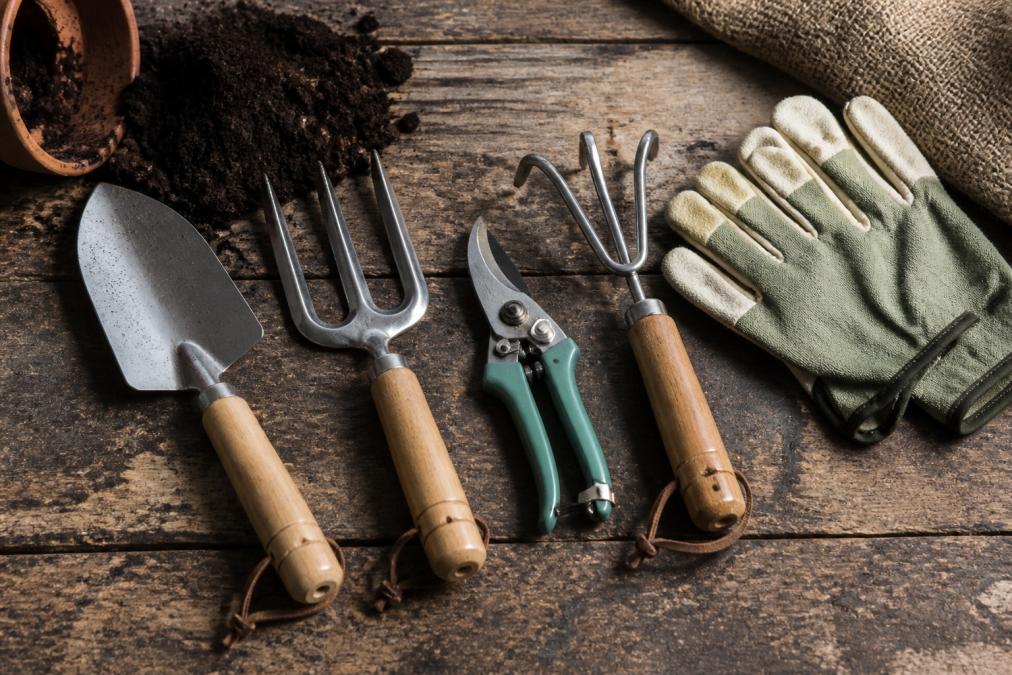
Hand Tools Every Beginner Needs
Durable garden tools for beginners should cover digging, cutting, and cultivating:
- Hand trowel, for planting, transplanting, and digging small holes
- Hand fork, for loosening compacted soil and removing weeds with tines intact
- Bypass pruning shears, for clean cuts on stems up to ¾ inch thick
- Garden hoe or cultivator, for breaking up soil surface and managing weeds
- Spade or border spade, for edging, digging, and turning soil
The structural integrity of each tool depends on material grade and the connection between head and handle. A stamped-metal trowel with a plastic handle lacks the tensile strength of forged steel.

According to U.S. Consumer Product Safety Commission injury surveillance data analyzed by LawnStarter, spades account for thousands of emergency room visits annually. Choosing tools with proper weight distribution and handle grip is a safety issue.
When to Add Power Tools to Your Setup
Add power tools once you've identified a recurring task that hand tools can't handle efficiently. The Downtown5 Manual Pole Saw with a 65Mn steel blade and fiberglass handle extends from 4.46 to 26.4 feet at $130.14. The fiberglass pole resists corrosion better than aluminum, and the 65Mn steel blade holds its edge through repeated use.
For larger properties, the 52CC 6-in-1 Gas Trimmer from Downtown5 covers hedge trimming, string trimming, brush cutting, edging, and pole saw work in one unit at $277.96.

Stainless Steel vs Carbon Steel Garden Tools: Which Lasts Longer?
Stainless steel is a steel alloy containing at least 10.5% chromium, which forms a passive oxide layer resisting rust and corrosion. Carbon steel is harder and stronger, holding a sharper edge but requiring more maintenance to prevent oxidation.
Both can last decades, but they fail differently and suit different conditions.
| Feature | Stainless Steel | Carbon Steel |
|---|---|---|
| Rust resistance | Excellent | Requires oiling/coating |
| Edge sharpness | Good | Excellent |
| Tensile strength | Moderate-high | High |
| Maintenance required | Low | Medium-high |
| Best for | Wet climates, low-maintenance users | Dry climates, experienced gardeners |
| Tool longevity | 20-30+ years with basic care | 20-30+ years with regular maintenance |
Users of Lee Valley stainless steel forks and shovels report tools holding up for over 30 years. Felco secateurs, made with high-carbon steel and replaceable parts, have users reporting 40-50 years of continuous use. Manufacturing method and maintenance habit matter more than material alone.
Forged vs Stamped Metal: Why Manufacturing Method Matters
Forged steel tools are shaped under extreme pressure or heat, aligning grain structure for maximum strength. Stamped metal tools are cut from flat sheet stock and bent into shape. A forged steel spade won't flex when prying out a rock; a stamped metal head will deform under the same load, often permanently.
Sneeboer's case study is concrete: a shovel purchased in 1959 was still in active use 65 years later, requiring only a handle replacement. The stainless steel head was in better condition than new tools because frequent use had polished the surface.
Handle Materials, Ergonomic Design, and Hand Fatigue
Handle quality is a structural and safety issue first, comfort second.
Wood handles (typically ash or hickory) absorb shock well, are repairable, and have been the professional standard for over a century. When a wooden handle breaks, you replace the handle, not the entire tool.
Fiberglass handles resist moisture, won't rot, and provide good shock absorption. They're non-conductive, which matters for digging near utility lines.
Rubber or composite grips reduce hand fatigue on tools used for extended sessions. Weight distribution matters more than raw weight. A heavy tool with its center of mass close to the hand requires less effort than a lighter tool with poor balance.
OSHA guidelines on ergonomic tool design for outdoor workers identify grip diameter, handle length, and wrist angle as primary factors in cumulative hand and wrist injury. Tools designed to keep the wrist in a neutral position during use reduce long-term strain significantly.
How to Choose Durable Garden Tools: 5 Quality Checks Before You Buy
Use these five checks before committing to any tool.
-
Check the head-to-handle connection. The socket should be solid with no play or wobble. A rolled socket that wraps around the handle is stronger than a simple tang-and-ferrule connection.
-
Assess the steel grade. Look for forged steel or stainless steel labeling. If the description only says "metal" or "alloy" without specifics, treat it as stamped metal.
-
Evaluate the handle grip. Run your hand along the full length. Splinters or rough patches on a new tool indicate poor finishing. On wooden handles, look for straight grain running parallel to the tool's length.
-
Test the weight distribution. Hold the tool at its grip point and feel where the balance sits. A well-balanced tool feels like an extension of your arm.
-
Look for repairability signals. Does the manufacturer sell replacement handles or blades? Tools with replaceable parts have longer potential lifespan than sealed or glued assemblies.

Manual Pole Saw, 7.3-27 ft Extendable Tree Pruner, Sharp Steel Blade High Branches Trimming, Manual Branch Trimmer with Lightweight 8 Fiberglass Handles, for Pruning Palms and Shrubs
Budget-to-Durability Ratio: What You Actually Get for Your Money
The real framework is cost-per-year of use. A $30 stamped steel trowel lasting two seasons costs $15/year. A $55 forged steel trowel lasting 15 years costs $3.67/year. The upfront price difference is $25. The long-term savings are over $170.
| Price Range | Typical Construction | Expected Lifespan | Cost Per Year |
|---|---|---|---|
| Under $15 | Stamped metal, plastic handle | 1-2 seasons | $7-15 |
| $15-$35 | Stamped or light forged, wood/composite | 3-7 years | $3-8 |
| $35-$75 | Forged or stainless steel, quality handle | 10-20 years | $2-5 |
| $75+ | Professional-grade forged, full warranty | 20+ years | $1-3 |
Some mid-range mass-produced tools perform as well as premium brands in real-world tests. The key variable isn't price tier alone, it's whether the manufacturer invested in manufacturing method and whether they stand behind the product with a warranty or replacement policy.
How to Maintain Garden Tools So They Last Decades
Tool longevity is 40% purchase decision and 60% maintenance habit. The best forged steel spade will rust into uselessness if left outside in wet conditions after every use.
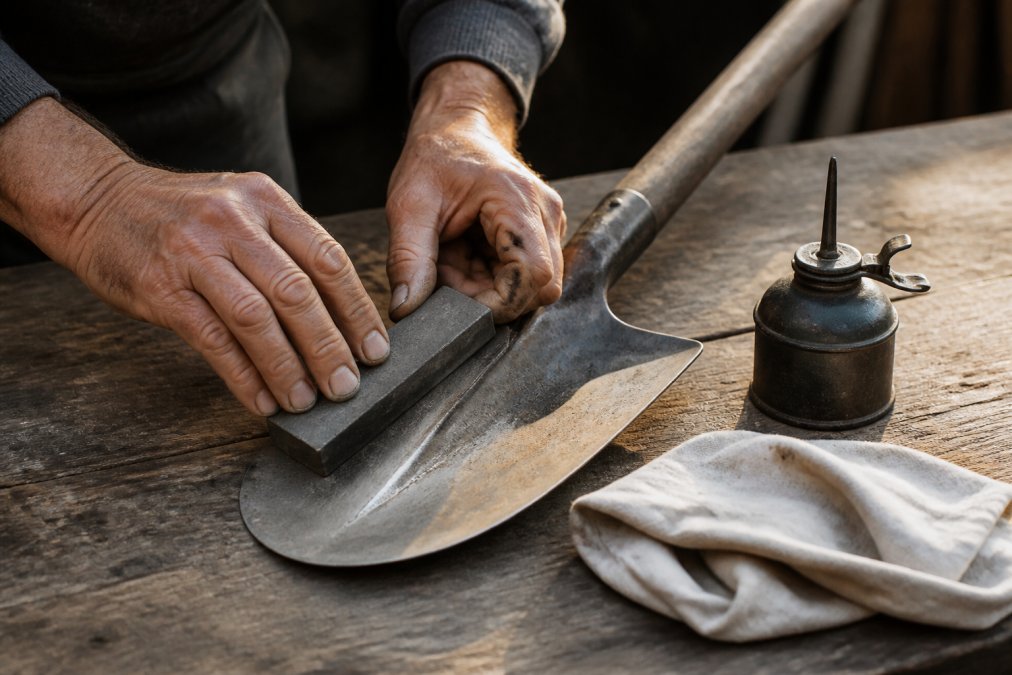
Cleaning, Sharpening, and Lubrication After Each Use
After each gardening session, follow this sequence:
- Remove soil from all metal surfaces using a stiff brush or dry cloth. Wet soil left on carbon steel accelerates corrosion within 24-48 hours.
- Rinse and dry any tool that contacted wet soil or water.
- Inspect the blade or cutting edge. Bypass pruning shears and hoes need sharp edges to cut cleanly.
- Sharpen as needed. A mill file or whetstone works for most blades. Maintain the original bevel angle, typically 20-25 degrees.
- Apply a light oil coat. Linseed oil on wooden handles, WD-40 or tool oil on metal surfaces. Lubrication at the pivot point of pruning shears is especially important.
"Gardening can be very hard on tools, and the last thing you want is a bent or broken one after trying to pull out a rock or weed." -- Springer (Old-School Gardening Tools That Are Still Worth Using, 2025)
Tool Storage and Rust Prevention
Store tools in a dry location, off the ground. Hanging tools vertically on a wall rack keeps metal heads from sitting in moisture that accumulates on concrete floors. In humid climates, a moisture-absorbing product in your storage area makes a measurable difference.
For long-term storage, clean all tools thoroughly, sharpen any dulled edges, apply a heavier coat of oil to all metal surfaces, and wrap handles with light cloth if prone to drying out. Climate-specific durability matters: coastal gardeners need stainless steel tools or proper rust-resistant coatings to combat salt air. High-humidity climates require more frequent oiling than dry Western climates.
Repairability and Spare Parts: The Overlooked Durability Factor
A tool's true lifespan is determined by whether you can fix it when it breaks, not when it breaks.
Felco's secateur line is the benchmark. The company sells individual replacement blades, springs, pivot bolts, and grip scales. A pair of Felco shears bought in 1980 is still in service today because every worn component can be sourced and swapped.
When evaluating any tool for long-term use, ask: does this manufacturer sell replacement handles? Can I source a new blade if the original chips? Is the pivot mechanism standard enough to repair with common tools? If the answer to all three is no, you're buying a disposable tool with a higher price tag.
The Downtown5 catalog includes tools built with these principles in mind, from fiberglass-handled pole saws with replaceable blades to multi-function gas trimmers designed with accessible components.
Choosing tools that fail after one season is the most common and most avoidable mistake in backyard gardening. The Downtown5 garden tools collection brings together professional-grade construction, quality materials, and genuine value, so you spend less time replacing equipment and more time using it. Browse the full selection at Downtown5, from manual pole saws with 65Mn steel blades to multi-function gas trimmers built for years of heavy use, and get the tools that will still be working a decade from now.
Frequently Asked Questions
Are forged garden tools better than stamped ones?
Forged tools are shaped under high pressure from a single piece of steel, which aligns the grain structure and increases tensile strength. Stamped tools are cut from sheet metal and are lighter and cheaper, but they bend under heavy loads and have lower structural integrity. For backyard gardening in clay or rocky soil, forged steel tools hold up far longer. Stamped tools work fine for light container gardening or raised beds where soil resistance is minimal.
Which is better for garden tools, stainless steel or carbon steel?
Stainless steel resists corrosion without any extra care, making it ideal for gardeners in humid climates or anyone who doesn't clean tools after every use. Carbon steel is harder, holds a sharper blade edge longer, and handles heavy digging better, but it rusts quickly if left wet. For beginners, stainless steel is the more forgiving choice. Experienced gardeners who maintain their tools regularly often prefer carbon steel for its superior blade sharpness and durability under pressure.
What are the essential garden tools for a beginner?
A beginner's toolkit should include a hand trowel, a digging fork or spade, bypass pruning shears, a cultivator, and a sturdy hoe. These five tools cover planting, digging, weeding, and pruning for most residential gardens. Choose tools with forged steel heads and ergonomic handles to reduce hand fatigue. Once your garden grows vertically, a pole saw for high branch trimming becomes the next logical addition to the set.
How should you maintain garden tools to ensure durability?
After each use, remove soil with a stiff brush, then wipe blades dry to prevent corrosion. Sharpen cutting tools like pruning shears and hoes at least once per season using a whetstone or file. Apply a light coat of linseed oil to wooden handles annually to prevent cracking. Store tools in a dry shed or hang them on a wall rack so metal heads don't rest on damp ground. Lubricate pivot points on bypass pruning shears every few months to maintain smooth blade action.
This article was written using GrandRanker