

5 Best Whole House Air Purifiers: 2026 Review
Table of Contents
- What Makes a Whole House Air Purifier Worth Your Investment
- Understanding Air Purifier CADR Ratings Explained
-
The 5 Best Whole House Air Purifiers for 2026
- 1. Coway Airmega Mighty2: Smart Sensors Meet Compact Design
- 2. Levoit Core 600S: Large-Room Performance and Efficiency
- 3. Blueair Blue Pure 311i Max: Balanced Smoke and Dust Filtration
- 4. Winix 5530: Energy-Efficient Filtration for Most Homes
- 5. Rabbit Air A3 Ultra Quiet: Premium Performance and Whisper-Quiet Operation
- Best Air Purifiers for Pet Dander and Allergies
- Air Purifier Filter Replacement Costs and Maintenance
- Whole House vs. Portable Air Purifiers: What's the Real Difference
- Key Features to Look for in a Whole House Air Purifier
- Frequently Asked Questions
Last Updated: September 28, 2026
What Makes a Whole House Air Purifier Worth Your Investment
Air quality directly impacts your family's health, sleep quality, and daily comfort. According to Consumer Reports' 2026 air purifier testing, over 180 air purifiers were evaluated for dust, smoke, and pollen removal. The difference between a mediocre unit and a top performer isn't subtle, it's measurable.
A whole house air purifier filters airborne contaminants throughout your living space, unlike portable units confined to a single room. The key question is which model delivers the best performance for your specific situation.
This guide breaks down the five best whole house air purifiers for 2026, explains critical ratings and features, and helps you make an informed decision based on real performance data.
Understanding Air Purifier CADR Ratings Explained
CADR (Clean Air Delivery Rate) measures how quickly an air purifier removes specific pollutants from a room. The rating tells you the volume of clean air the unit delivers per minute for dust, smoke, and pollen separately. A higher CADR means faster filtration, critical when you're dealing with pet dander, smoke, or seasonal allergies.
CADR ratings range from 0 to 450+ for most residential units. A rating of 300+ handles large rooms effectively. For context, Wirecutter's 2026 air purifier evaluation tested over 70 models across a decade of research, consistently prioritizing CADR performance as a primary selection criterion.
Higher CADR means faster air cleaning, but you must match the unit's coverage area to your room size. A 600+ CADR unit designed for 500+ square feet won't perform optimally in a 200-square-foot bedroom.
The 5 Best Whole House Air Purifiers for 2026
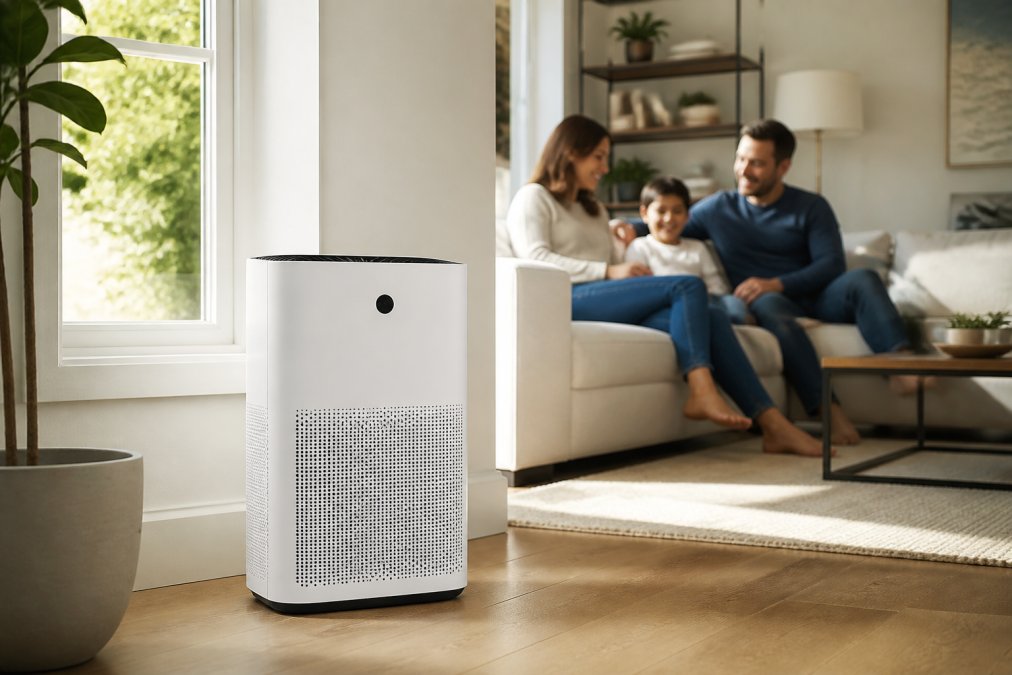
1. Coway Airmega Mighty2: Smart Sensors Meet Compact Design
The Coway Airmega Mighty2 leads the market for good reason. This unit combines onboard air quality sensors with smart home integration in a compact footprint. According to HouseFresh's 2026 testing, the Mighty2 consistently ranks as a top performer for balancing performance, noise levels, and intelligent operation.
The smart sensor automatically adjusts fan speed based on real-time air quality, with app connectivity for remote monitoring and scheduling. For families managing pet dander or allergies, auto mode works harder when needed and quiets down when air quality improves.
Pros:
- Intelligent auto mode with air quality sensors
- Whisper-quiet operation in sleep mode
- Compact design fits apartments and small homes
- Smart app connectivity
Cons:
- Higher upfront cost than basic models
- Filter replacement can be expensive
- Overkill for very small rooms
Best for: Tech-savvy homeowners who want automation and don't mind paying for convenience.
2. Levoit Core 600S: Large-Room Performance and Efficiency
The Levoit Core 600S tackles large spaces with impressive efficiency. Lab testing by Air Purifier First's 2026 performance evaluation documented a 96% improvement in air quality within one hour in a 560 square foot room. That's measurable, real-world performance.
This unit delivers high CADR ratings without excessive electricity consumption. The three-stage filtration system removes dust, smoke, pollen, and volatile organic compounds with straightforward controls and quick setup.
Pros:
- Exceptional large-room coverage
- Energy-efficient operation
- Affordable price point
- Three-stage filtration system
Cons:
- No smart features or app control
- Louder fan at higher speeds
- Filter replacement needed every 6-8 months
Best for: Budget-conscious families needing serious whole house coverage without smart features.
3. Blueair Blue Pure 311i Max: Balanced Smoke and Dust Filtration
According to CNET's 2026 testing, the Blueair Blue Pure 311i Max delivers balanced performance across smoke and dust filtration. This unit won't top every benchmark, but it excels at what matters most: consistent, reliable air cleaning across multiple pollutant types.
The minimalist design fits contemporary aesthetics, the washable pre-filter reduces long-term costs, and noise levels stay reasonable even at maximum speed.
Pros:
- Balanced filtration across pollutant types
- Washable pre-filter reduces costs
- Sleek, modern design
- Reasonable noise levels
Cons:
- Mid-range CADR performance
- No smart features
- Smaller room coverage than premium models
Best for: Design-conscious homeowners wanting reliable performance in medium-sized spaces.
4. Winix 5530: Energy-Efficient Filtration for Most Homes
The Winix 5530 represents solid middle-ground performance. RTINGS' 2026 evaluation identified this model as the best air purifier for most users, citing strong filtration capabilities, energy efficiency, and quiet operation. It's not the flashiest choice, but it delivers consistent results without premium pricing.
This unit includes four-stage filtration with activated carbon for odor removal and auto mode that adjusts fan speed based on air quality. For families with pets or allergies, the performance-to-cost ratio is difficult to beat.
Pros:
- Strong energy efficiency
- Four-stage filtration system
- Auto mode operation
- Reliable long-term performance
Cons:
- Basic design without smart features
- Mid-range CADR ratings
- Filter replacement costs add up
Best for: Practical homeowners wanting dependable performance at reasonable cost.
5. Rabbit Air A3 Ultra Quiet: Premium Performance and Whisper-Quiet Operation
The Rabbit Air A3 prioritizes silent operation without sacrificing performance, suiting homes where noise sensitivity matters. The ultra-quiet motor won't disturb sleep or concentration.
According to Forbes' 2026 HEPA-certified model review, Rabbit Air ranks among top-tier options for residential air quality management. The wall-mounted design saves floor space with customizable aesthetics and performance metrics aligning with more expensive units.
Pros:
- Exceptionally quiet operation
- Wall-mount design saves space
- Premium filtration performance
- Customizable aesthetics
Cons:
- Premium pricing
- Installation requires wall mounting
- Limited smart features
Best for: Noise-sensitive households and premium homes where aesthetics matter.
| Model | Best For | Room Size | Key Strength |
|---|---|---|---|
| Coway Airmega Mighty2 | Smart home integration | Up to 600 sq ft | Auto sensors |
| Levoit Core 600S | Large spaces on budget | 500+ sq ft | Performance value |
| Blueair Blue Pure 311i Max | Design-conscious buyers | 300-400 sq ft | Balanced filtration |
| Winix 5530 | Most homes | 350-450 sq ft | Energy efficiency |
| Rabbit Air A3 | Quiet operation priority | 400-500 sq ft | Silent performance |
Best Air Purifiers for Pet Dander and Allergies
Pet dander circulates constantly, triggering allergies and requiring aggressive filtration. Models with high CADR ratings for dust excel at capturing dander particles before they settle.
The Coway Airmega Mighty2 and Levoit Core 600S both handle pet dander exceptionally well, with auto mode detecting increased particulate levels and boosting filtration. Activated carbon filters capture pet odors.
For allergy sufferers, placement matters as much as the unit itself. Position your air purifier in the bedroom, where you spend eight hours daily, to maximize filtered air exposure.
Air Purifier Filter Replacement Costs and Maintenance
Filter replacement represents the true cost of ownership.
Filter Lifespan and Replacement Schedules
Five-Year Cost-of-Ownership Comparison
Coway Airmega Mighty2: Replacement filters cost $90-120 per set. Most users replace annually, some twice yearly if running 24/7. Five-year filter cost: $450-600. Upfront unit cost: $300-350. Total five-year cost: $750-950.
Filter Availability and Supply Chain Risk
Maintenance Beyond Filter Replacement
Filter Disposal and Environmental Considerations
Budgeting for Unexpected Costs
Whole House vs. Portable Air Purifiers: What's the Real Difference
The term "whole house air purifier" describes two fundamentally different systems with vastly different installation requirements, costs, and performance profiles.
True Whole House Systems (HVAC-Integrated)
Portable Units (Room-by-Room)
The Critical Trade-Off: Coverage vs. Flexibility
Installation and Maintenance Implications
Key Features to Look for in a Whole House Air Purifier
When evaluating models, prioritize: true HEPA filtration (99.97% removal), appropriate CADR ratings for your room size, noise levels (50-60 decibels on high speed), annual filter costs, air quality sensors for auto mode, and Energy Star certification. Smart home integration adds cost but isn't essential.
Frequently Asked Questions
What is the best whole house air purifier on the market?
The Coway Airmega Mighty2 stands out as the top pick for 2026 based on independent testing by Wirecutter and HouseFresh. It combines smart sensor technology, quiet operation, and reliable HEPA filtration in a compact design. The Levoit Core 600S also ranks highly, achieving 96% pollutant reduction in 560 sq. ft. rooms according to Air Purifier First testing. Your best choice depends on room size, budget, and whether you prioritize smart features or pure filtration performance.
How do I choose the right air purifier for my square footage?
Match the purifier's CADR rating to your room size. CADR measures how many cubic feet per minute the unit cleans. For a 500+ sq. ft. space, look for models like the Levoit Core 600S or Coway Airmega Mighty2 that handle large rooms effectively. Smaller units work best in bedrooms or offices under 300 sq. ft. Check the manufacturer's specifications for the recommended room size, and remember that whole house units are typically limited to the room where they're placed, not your entire home.
What is the difference between a portable air purifier and a whole house system?
Portable air purifiers sit in a single room and clean that space effectively. Whole house systems integrate with your HVAC to filter air throughout your home. However, most 'whole house' units sold are actually portable models marketed for large rooms. True HVAC integration requires professional installation and higher investment. Portable units offer flexibility and faster setup, making them ideal for renters or those wanting to start with one room before expanding.
Are whole house air purifiers worth the investment?
Yes, if indoor air quality matters to your family. Consumer Reports testing of 180+ models confirms that top performers effectively remove dust, smoke, and pollen. For homes with pets, allergies, or asthma triggers, the health benefits justify the cost. Consider long-term filter replacement expenses when calculating total cost of ownership. Energy Star certified models reduce electricity costs, and smart features like auto mode help optimize runtime based on actual air quality needs.